Imagine the scent of freshly planed cedar mingling with the sharp, metallic tang of a well honed chisel. It is a sensory overload that anchors you to the workbench. There is a specific vibration that travels up your arm when a blade shears through the cellular structure of wood at just the right angle. This tactile feedback is why I started The Sustainable Maker Blog; it is a space where we dissect the physics of creation without trashing the planet. When you run your thumb over a piece of reclaimed oak, you are feeling centuries of lignin development and environmental history. I realized that my workshop footprint was becoming a heavy burden on the very nature that inspired my designs. Transitioning to a green shop was not just a moral pivot. It was a technical upgrade. Understanding the tensile strength of recycled polymers and the porosity of organic finishes makes you a better maker. We are not just building objects; we are engineering a legacy that respects the source material.
THE STUDIO KIT
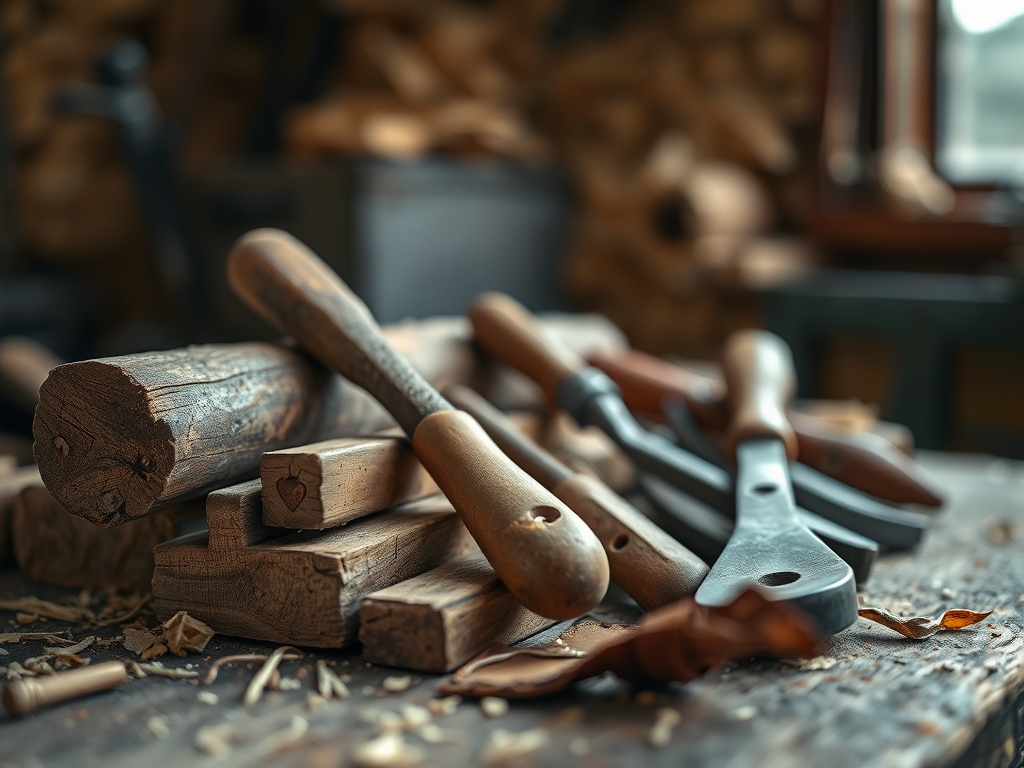
To master the green workshop, your toolkit must evolve from disposable convenience to precision longevity. My primary instrument is a pair of hardened steel calipers, essential for measuring the gauge of recycled sheet metal or the thickness of a hand-planed board to within a thousandth of an inch. For joinery, I rely on a japanese pull saw with a high tooth count for narrow kerfs, which minimizes sawdust waste. I also keep a bone folder and a rotary cutter on hand for working with sustainable textiles like hemp canvas or pineapple leather.
Material Substitutions are the secret sauce of a green studio. Instead of petroleum-based epoxies, I utilize bio-based resins derived from soy or corn. These offer comparable shear strength without the toxic off-gassing. For adhesives, I have swapped standard PVA glue for rabbit-skin glue or high-grade cornstarch pastes when the project allows for a longer set time. If you are looking for a premium finish, skip the aerosol lacquers and reach for burnishing oils like tung or linseed. These penetrate the capillary structure of the material rather than sitting on top, creating a finish that ages gracefully rather than cracking.
THE TEMPO
The "Maker's Rhythm" is a biological clock that dictates the success of a build. You cannot rush the hygroscopic nature of wood or the evaporation rate of water-based dyes. I break my sessions into three distinct phases: The Calibration, The Execution, and The Curing. Calibration takes about twenty percent of the time. This is where I check the squareness of my fences and the sharpness of my bits. A dull tool requires more force, which increases the risk of mechanical failure in the workpiece.
The Execution is the flow state. This is where the ergonomic design of your workspace pays off. By keeping my most-used tools within a thirty-inch radius, I reduce fatigue and maintain a steady feed rate on my machinery. Finally, The Curing phase is often the most neglected. Whether it is glue drying or a finish polymerizing, rushing this stage compromises the structural integrity of the entire piece. I allow at least twenty-four hours for any chemical bond to reach full cross-linking density before stress testing the joint.
THE CORE METHOD
1. Analyzing Grain Direction and Fiber Density
Before the first cut, you must map the material. In woodworking, this means identifying the longitudinal, radial, and tangential planes. For textiles, it is about finding the warp and weft. By aligning your cuts with the natural fiber direction, you maximize the tensile strength of the final product.
Mastery Tip: Always cut "downhill" relative to the grain. This prevents tear-out, a phenomenon where the tool lifts the fibers ahead of the cutting edge, ruining the surface finish.
2. Precision Marking and Scoring
Using a mechanical pencil or a marking awl, transcribe your measurements onto the workpiece. I prefer an awl because it severs the surface fibers, creating a physical "track" for your saw or chisel to follow. This reduces the friction coefficient during the initial bite of the tool.
Mastery Tip: Use a try square to ensure every line is perfectly perpendicular. Even a half-degree deviation can lead to cumulative error, resulting in gaps that weaken the mechanical bond of your joinery.
3. Controlled Material Removal
Whether you are using an oscillating tool for detail work or a jeweler's saw for intricate metalwork, the key is consistent pressure. Let the tool do the work. Forcing a blade through a material creates heat, which can cause thermal expansion and lead to inaccurate dimensions.
Mastery Tip: Monitor the color of your chips or swarf. If you see darkening or "burning," your surface speed is too high. Slow down to preserve the molecular structure of the material edge.
4. Surface Preparation and Burnishing
Once the shape is finalized, we move to abrasion. I start with a coarse grit and move progressively to finer abrasives. However, in a green shop, I often prefer burnishing with a polished steel rod or a smooth stone. This compresses the surface fibers rather than removing them.
Mastery Tip: Burnishing increases the surface density, making the material more resistant to moisture. This utilizes capillary action in reverse by closing off the pores that would otherwise drink up humidity.
THE TECHNICAL LEDGER
Maintenance is the heartbeat of sustainability. I treat my tools with a light coat of camellia oil to prevent oxidation. For longevity, every tool with a cutting edge undergoes a honing session after four hours of use to maintain the micro-bevel.
Material Variations:
- Sustainable: Reclaimed pallet wood (requires scanning for fasteners with a metal detector).
- Recycled: HDPE plastic sheets melted from milk jugs (excellent impact resistance).
- Premium: Certified FSC-certified walnut (high dimensional stability).
The Correction:
- The Mistake: Over-clamping a joint, which squeezes out all the glue. The Fix: Use a spacer block to maintain a 0.003-inch glue line for optimal bonding.
- The Mistake: Grain run-out on a curved cut. The Fix: Reinforce the area with a spline to bridge the weak fibers.
- The Mistake: Surface "blushing" in high humidity. The Fix: Use a dehumidifier in the studio to keep the ambient moisture below fifty percent during the finishing stage.
Studio Organization:
Store your materials vertically to prevent bowing or cupping caused by gravity and uneven moisture distribution. I use a rack system that allows for airflow around every piece of stock, ensuring the equilibrium moisture content remains stable throughout the seasons.
THE FINAL REVEAL
There is a profound magic in the moment a project is finally assembled. When you slide a drawer into its housing and hear that soft "whoosh" of displaced air, you know your tolerances are perfect. The finished piece feels heavy, intentional, and alive. Because we used non-toxic finishes and sustainable joinery, the item is safe for the home and the planet. It possesses a tactile warmth that mass-produced items lack. You can see the history in the grain and the precision in every burnished edge. This is the reward for respecting the physics of the craft.
STUDIO QUESTIONS
Why is grain direction important for strength?
Aligning the load with the longitudinal fibers maximizes tensile strength. Cutting across the grain creates a weak point where the material can shear under pressure. Always map your stress points before cutting to ensure structural integrity.
How do I prevent wood from warping?
Maintain a consistent equilibrium moisture content in your shop. Store wood flat or vertically with spacers to allow airflow. This prevents uneven expansion and contraction of the cellular walls within the timber.
What is the benefit of bio-based resins?
Bio-resins offer high molecular adhesion without the volatile organic compounds (VOCs) found in traditional epoxies. They provide a safer breathing environment while maintaining a high strength to weight ratio for structural bonds.
Can I use recycled plastic for structural parts?
Yes, but you must account for creep, which is the tendency of polymers to deform under long-term stress. Reinforce recycled plastic with mechanical fasteners or use it in compression-heavy designs.
Why should I use an awl instead of a pencil?
An awl creates a physical score that severs surface fibers. This provides a precise guide for tools and prevents grain splintering at the start of a cut, ensuring a much cleaner mechanical fit.