The scent of freshly planed cedar hits you before the coffee even finishes brewing; it is that crisp, resinous tang that signals the start of a serious build. I always begin by running my thumb across the grain of a new mahogany plank to check the fiber density. Feeling that subtle resistance tells me exactly how the blade will behave once the friction starts. To stay consistent, I follow a strict Integrated Maker Routine that balances my creative output with the physical demands of the shop. This prevents the mid afternoon slump where precision usually starts to fail. When you understand the tensile strength of your timber or the way a specific adhesive cures under local humidity, you stop fighting the material and start dancing with it. We are not just making things; we are manipulating the physical world through a series of calculated, high energy movements. Grab your apron and let us get into the shop flow that keeps my brain sharp and my projects structurally sound.
THE STUDIO KIT
THE STUDIO KIT
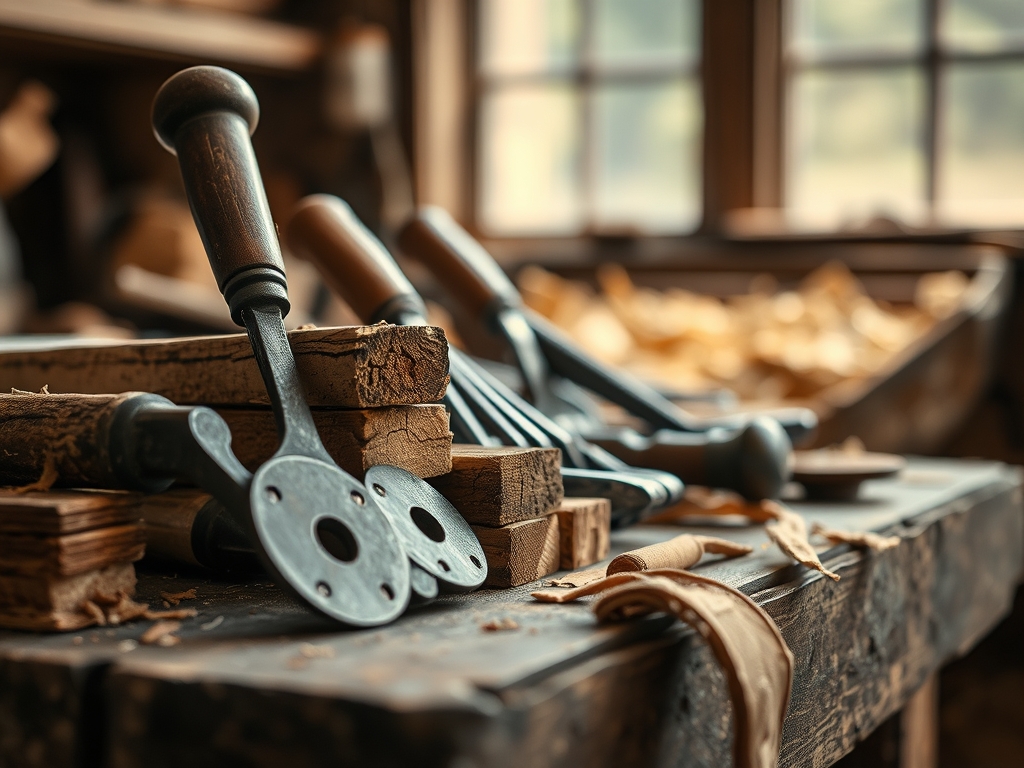
To execute this routine effectively, your bench needs a specific loadout that prioritizes both precision and ergonomics. My primary tool is a high grade digital caliper because guessing a millimeter is the fastest way to ruin a joinery fit. You will also need a honed marking knife rather than a pencil; the knife severs the wood fibers, providing a physical track for your saw to follow, which prevents splintering. I keep a bone folder on hand for any paper or leather elements because its smooth, non reactive surface allows you to burnish edges without adding unwanted oils or marring the material.
For the actual assembly, ensure you have a variety of parallel jaw clamps to distribute pressure evenly across the surface area. If you are working with hardwoods, keep a bottle of aliphatic resin glue nearby for its superior shear strength.
Material Substitutions: If mahogany is outside the budget, look for Sapele; it offers a similar interlocking grain pattern and high rot resistance at a lower price point. For those avoiding animal products, a teflon creaser is a perfect technical substitute for a traditional bone folder, offering the same low friction benefits without the organic component.
THE TEMPO
The "Maker's Rhythm" is a biological pacing strategy designed to match your cognitive load with your physical stamina. I break my morning into three distinct phases. The first 90 minutes are the Precision Phase, where I handle all measuring, marking, and critical cuts. This is when your hand eye coordination is at its peak. Technical Fact: Human fine motor skills are most acute roughly two hours after waking as cortisol levels stabilize.
Next is the Kinetic Phase, lasting two hours. This is the heavy lifting: sanding, planing, and assembly. Your heart rate increases, and you utilize larger muscle groups. Finally, we hit the Cure Phase, which is 30 minutes of cleanup and jig maintenance while the projects sit in their clamps. This cycle ensures that you never rush a measurement while tired, which is the leading cause of material waste in professional studios.
THE CORE METHOD
1. Calibrating the Workspace
Before a single cut is made, I calibrate my square and check the tension on my bandsaw blade. A blade that is too loose will wander, creating a "barrel cut" that ruins the structural integrity of a joint. I use a tension gauge to ensure the steel is taut enough to vibrate at a specific pitch.
Mastery Tip: This relies on the physics of Harmonic Tension. A properly tensioned blade minimizes lateral deflection, ensuring that the force applied by the motor is converted entirely into vertical cutting power rather than heat generating friction.
2. Scribing the Reference Lines
I use my marking knife to create a "wall" for my chisel. By slicing through the longitudinal tracheids of the wood, I am creating a microscopic canyon. Observe the alignment in the step-by-step photos below; the knife line is clean and deep.
Mastery Tip: This technique utilizes Fiber Severing. By pre cutting the surface fibers, you prevent the "grain follow" effect where a saw blade or chisel might be pulled off course by a particularly dense growth ring.
3. The Initial Reduction
Using an oscillating tool or a hand saw, I remove the bulk of the waste material. I always leave about a sixteenth of an inch of "meat" on the bone. This allows for final tuning with a hand plane or rasp.
Mastery Tip: This accounts for Thermal Expansion. High speed power tools generate localized heat that can cause wood cells to expand slightly. Leaving a small margin allows the material to cool and settle before the final precision fit is established.
4. Refining the Surface
Now I switch to the block plane. I adjust the lateral adjustment lever until the shaving is paper thin and translucent. This is the most tactile part of the morning; you can hear the difference between a dull blade and a sharp one.
Mastery Tip: The science here is Shear Angle. A low angle plane slice shears the wood fibers at a molecular level rather than crushing them, which results in a surface that is naturally water resistant because the pores remain tightly sealed.
THE TECHNICAL LEDGER
Maintenance & Longevity: To keep your studio running, you must treat your steel tools with camellia oil. Unlike petroleum products, it is non toxic and won't stain your wood. Every Friday, I check my sharpening stones for flatness using a diamond plate to ensure my bevels stay true.
Material Variations:
- Sustainable: Bamboo plywood offers incredible tensile strength and is a rapidly renewable resource.
- Recycled: Reclaimed barn wood has a low moisture content, making it exceptionally stable, though you must check for hidden ferrous metals with a detector.
- Premium: Quarter sawn white oak provides the best dimensional stability due to the vertical orientation of the medullary rays.
The Correction:
- The Gap: If a joint has a hairline gap, do not just fill it with sawdust. Use a "veneer shim" of the same species to maintain grain continuity.
- The Burn: If your router bit leaves a burn mark, it means your feed rate was too slow. Use a card scraper to remove the charred lignin without changing the geometry of the piece.
- The Crack: If a board checks at the end, it is losing moisture too fast. Seal the end grain with paraffin wax to slow down the evaporation process.
Studio Organization: Store your lumber horizontally on a rack with "stickers" (small wood strips) between each layer. This allows for 360 degree airflow, preventing the wood from bowing due to uneven moisture absorption. Keep your precision measuring tools in a lined drawer to prevent the metal from "clinking" and losing its calibration.
THE FINAL REVEAL
There is nothing quite like the moment you release the clamps and the joinery holds purely through friction and physics. The surface feels like glass, the weight is perfectly balanced, and the grain patterns flow into one another like a liquid. When you follow a disciplined routine, the finished piece isn't just an object; it is a physical record of your focus and technical skill. You can feel the quality in the heft and the "thunk" of the wood. It is sturdy, beautiful, and built to outlast us both.
STUDIO QUESTIONS
How do I prevent wood from warping after I cut it?
Always plane both sides of a board equally to maintain internal tension balance. If you remove material from only one side, the moisture release becomes asymmetrical, causing the wood to "cup" toward the freshly exposed fibers.
What is the best way to clean my saw blades?
Use a specialized pitch and resin remover. Over time, wood resins bake onto the teeth due to friction heat, increasing drag and causing burns. A clean blade requires less force and produces a much cooler, cleaner cut.
Can I use regular glue for outdoor projects?
No, you must use a Type III waterproof adhesive. Standard wood glues are water resistant but will eventually undergo "creep" or total bond failure when exposed to constant humidity cycles and UV degradation.
Why does my sandpaper keep clogging?
This is known as loading. It happens when the frictional heat melts the resin in the wood, trapping dust in the grit. Use a rubber cleaning stick to pull the debris out and extend the life of your abrasives.