Imagine the sharp, citrus scent of freshly planed cedar colliding with the cool, metallic tang of a precision-ground jeweler's saw. My hands are currently coated in a fine dusting of silica and pigment; it is the physical evidence of a morning spent chasing the perfect edge. I found that my chaotic thoughts only settled when my fingers were forced to respect the tensile strength of the materials before me. This process is not just a hobby; it is a profound practice of Healing Through Artistic Flow that recalibrates my nervous system through the rhythmic friction of tool against grain. When you focus on the microscopic level of a surface, the world outside simply ceases to exist.
The secret to this calm is not found in the silence of the room, but in the intense mechanical focus required to manipulate physical matter. I realized that my mind needed a task more complex than my anxieties. By engaging with the viscosity of resins and the structural integrity of hardwoods, I transformed my workspace into a laboratory of the soul. Every cut must be deliberate. Every measurement must be verified with calipers to the thousandth of an inch. This is where the magic happens; where the frantic energy of a busy life is channeled into the steady, unwavering pressure of a bone folder or the delicate vibration of an oscillating tool. We are building more than an object; we are constructing a sanctuary of focus.
THE STUDIO KIT
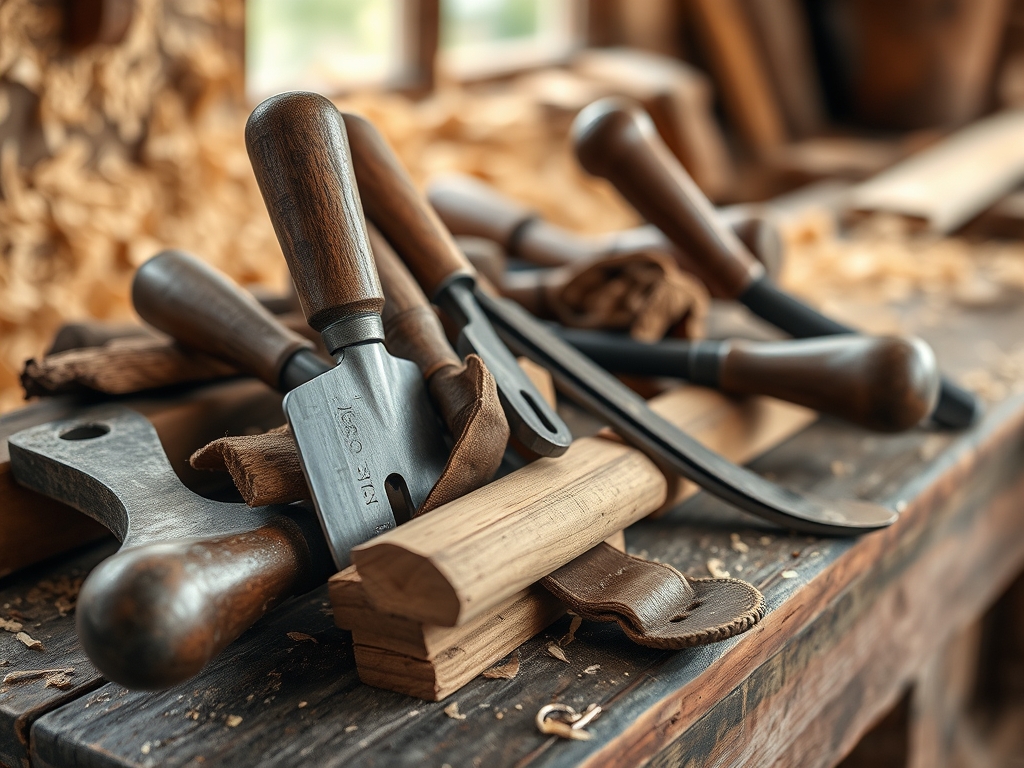
To master this craft, you need tools that act as extensions of your own biology. We start with the gauge of our base material; typically a high-density, low-porosity substrate that resists warping under environmental stress. You will need a rotary cutter with a tungsten carbide blade for clean, non-fraying edges, and a set of steel-tipped awls for marking points without compromising the fiber density of your surface.
For the adhesive phase, we utilize a pH-neutral polyvinyl acetate (PVA) which offers a flexible bond, allowing for the natural expansion and contraction of organic fibers. If you cannot source professional-grade PVA, a high-quality wood glue diluted with 10 percent distilled water serves as a viable Material Substitution, though it may slightly alter the refractive index of your finish. Always keep a burnishing tool nearby; the friction-generated heat helps the adhesive penetrate the capillary structure of the material, ensuring a permanent, molecular-level bond.
THE TEMPO
The "Maker's Rhythm" is a biological metronome. We begin with the Preparation Phase, which takes approximately sixty minutes of focused sorting and measuring. This is followed by the Execution Phase, a three-hour window where the "flow state" is most accessible. During this time, your brain waves actually shift from beta to alpha, mirroring the repetitive, mechanical motions of your hands.
Finally, we respect the Curing Phase. Depending on the ambient humidity of your studio, this can take anywhere from twelve to twenty-four hours. You cannot rush the evaporation of solvents or the setting of polymers. Trying to intervene during the curing process disrupts the cross-linking of molecules, which can lead to structural failure or surface clouding. Patience here is a technical requirement, not just a virtue.
THE CORE METHOD
1. Calibrating the Substrate
Before the first cut, you must assess the grain direction of your material. Using your calipers, measure the thickness at four points to ensure uniformity. If the material is organic, like wood or heavy paper, identify the "long grain" to prevent snapping under tension.
Mastery Tip: Understanding hygroscopy is vital; materials will absorb moisture from the air, causing them to swell perpendicular to the grain. Always orient your primary stress points parallel to the fiber direction for maximum tensile strength.
2. Precision Mapping and Piercing
Use your awl to create microscopic pilot holes at every intersection point. This prevents the material from "creeping" or shifting when you apply the pressure of a blade or needle. Observe the alignment in the step-by-step photos below to see how these marks create a geometric grid.
Mastery Tip: This step utilizes displacement physics. By pre-piercing, you are moving fibers aside rather than tearing them, which maintains the structural integrity of the surrounding area.
3. Controlled Application of Pigment
When applying color or sealant, use a high-density foam applicator to avoid introducing air bubbles. Move in a single direction to ensure the surface tension of the liquid pulls it into a perfectly flat, level plane.
Mastery Tip: This relies on capillary action. The liquid is drawn into the pores of the substrate by inter-molecular forces. If you apply too much pressure, you collapse these pores and create an uneven, "blotchy" finish.
4. The Final Burnish
Once the piece is "tack-free" but not yet fully cured, use a bone folder or a polished stone to burnish the edges. This compresses the outer fibers, creating a mechanical seal that protects against oxidation.
Mastery Tip: Burnishing works through frictional heat and pressure, which re-aligns the surface molecules into a denser, more reflective configuration. This increases the "Mohs hardness" of the edge.
THE TECHNICAL LEDGER
Maintenance & Longevity: To ensure your creation lasts for decades, keep it in a climate-controlled environment with a steady humidity of 45 to 50 percent. Avoid direct UV exposure, which triggers photo-degradation in organic dyes and breaks down polymer chains.
Material Variations: For a sustainable approach, swap virgin substrates for recycled cellulose composites. These often have a higher isotropic consistency, meaning they react the same way to stress in all directions. For a premium feel, incorporate annealed copper accents; the softness of the metal allows for incredible detail when using a jeweler's saw.
The Correction:
- The Gap: If joints don't meet, create a "fillet" using a mixture of sawdust and PVA. This creates a composite bond that is often stronger than the original material.
- The Tear: If a fiber rips, use a scalpel to lift the edge, apply a minute amount of cyanoacrylate, and hold under pressure for sixty seconds to achieve a molecular weld.
- The Bubble: If air is trapped under a finish, use a fine-gauge needle to vent the air, then use a heat gun on the lowest setting to allow the liquid to "flow" back into the void.
Studio Organization: Store your materials horizontally on a flat, non-reactive surface like tempered glass or stainless steel. This prevents gravitational creep, where materials slowly deform under their own weight over time.
THE FINAL REVEAL
Looking at the finished piece, you can see the harmony of physics and intent. The edges are crisp; the surfaces are smooth; the geometry is flawless. But the real masterpiece is the state of your mind. By respecting the thermodynamics and mechanical properties of your tools, you have silenced the noise of the outside world. The piece is a physical record of your presence. It is heavy, cool to the touch, and vibrates with the energy of focused creation. You didn't just make an object; you engineered a moment of absolute peace.
STUDIO QUESTIONS
How do I prevent my wood base from warping?
Warping occurs due to uneven moisture loss. Always seal both sides of your substrate simultaneously. This ensures the evaporation rate is identical on the top and bottom, maintaining internal equilibrium and preventing the fibers from pulling the material into a curve.
What is the best way to clean my jeweler's saw?
Use a dry, stiff-bristled brush to remove metallic dust from the teeth. Periodically apply a thin layer of beeswax to the blade. This reduces friction and heat buildup, which preserves the temper of the steel and prevents premature snapping.
Can I use a different adhesive for synthetic materials?
For non-porous synthetics, switch to a cyanoacrylate or a two-part epoxy. These create a chemical bond rather than a mechanical one. Ensure the surfaces are "keyed" or roughened slightly to increase the surface area for the adhesive to grip.
Why does my finish look cloudy after drying?
Cloudiness, or "blushing," happens when moisture is trapped under the surface. This usually occurs if the humidity is too high during application. Use a dehumidifier in your studio to ensure the solvent evaporates before water vapor can settle into the film.