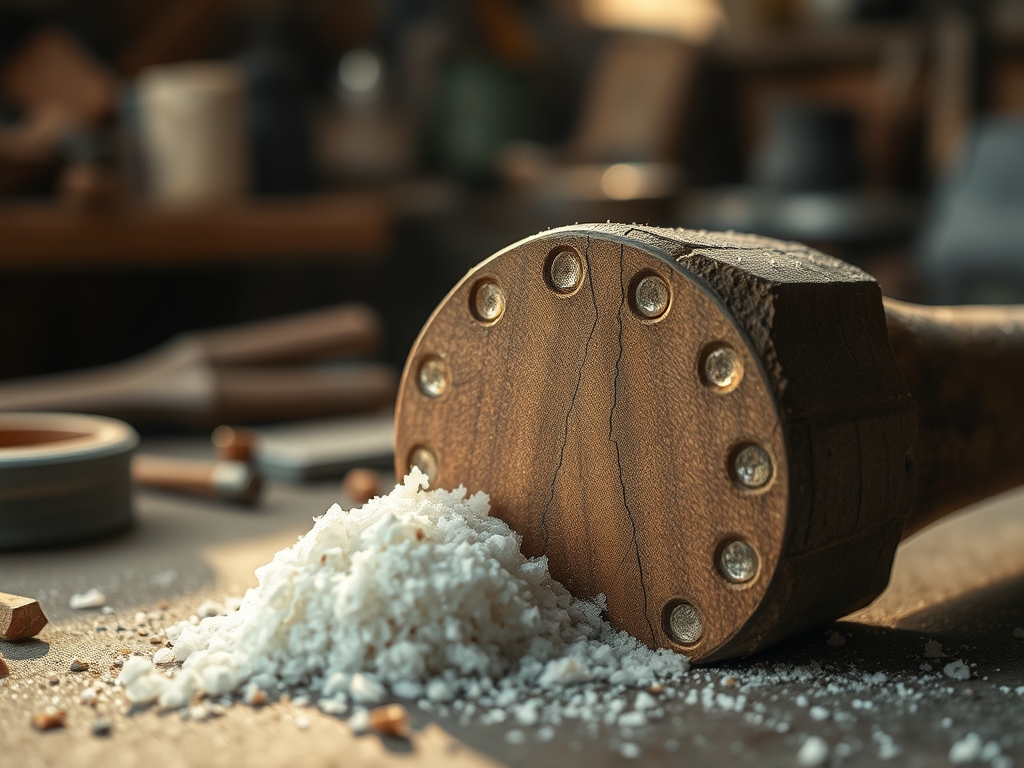
Imagine the sharp, biting scent of the Atlantic mist hitting a hot kiln; it is a sensory overload that makes your teeth tingle. I am currently obsessed with the way raw timber reacts when it is submerged in a hyper-saturated brine. To get that perfect, crack-free finish on green wood, I have realized that store-bought sodium chloride just will not cut it. I am Foraging For Sea Salt directly from the source to ensure my wood seasoning baths have the exact mineral profile needed to stabilize unruly grain. We are talking about deep-sea chemistry meeting high-end woodworking.
The physics here is fascinating. When you soak a porous piece of cherry or walnut in a handcrafted salt solution, you are initiating a process of osmotic pressure control. The salt draws out the "free water" from the cellular cavities of the wood while simultaneously slowing the evaporation of "bound water" within the cell walls. This prevents the dreaded checking and warping that ruins a bowl blank before you can even get it on the lathe. By harvesting my own salt, I am keeping the trace minerals like magnesium and calcium intact, which act as natural buffering agents for the wood fibers. It is messy, it is scientific, and it is absolutely brilliant.
THE STUDIO KIT
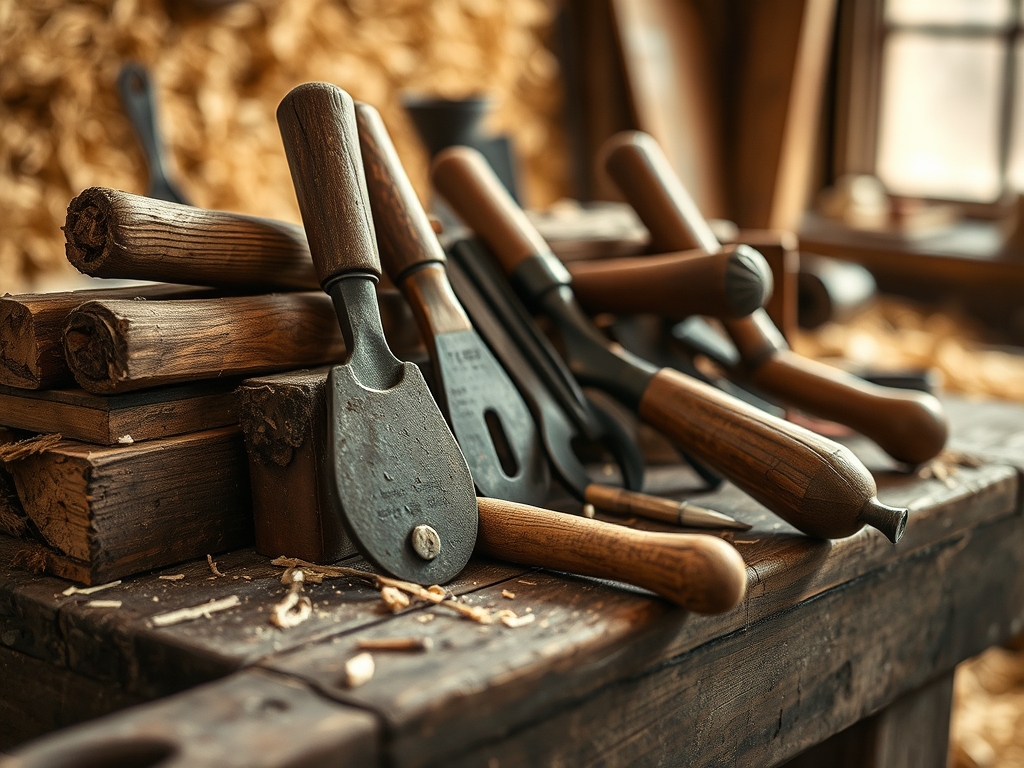
To pull this off, you need a kit that looks like a cross between a chemistry lab and a commercial kitchen. Your primary tool is a high-accuracy digital refractometer to measure the salinity levels of your collected water. You cannot rely on guesswork when you are aiming for a specific specific gravity. You will also need a series of fine-mesh stainless steel filters and a large, shallow evaporation pan. I prefer using a heavy-gauge copper basin because its thermal conductivity is unparalleled, allowing for an even heat distribution that prevents the salt crystals from scorching or forming uneven clusters.
For the collection phase, grab several five-gallon food-grade buckets and a submersible pump if you are pulling from deeper tide pools. If you cannot get to the coast, your "Material Substitution" is a high-quality Himalayan pink salt or unrefined Celtic sea salt. However, the commercial stuff often lacks the organic particulates that help "seed" the seasoning bath. You will also want a stainless steel rake or a flat-edged spatula to harvest the "fleur de sel" as it forms on the surface. These delicate flakes have a higher surface area-to-volume ratio, making them dissolve instantly when you are calibrating your final wood bath.
THE TEMPO
The Maker's Rhythm for salt harvesting is dictated entirely by the hygroscopic nature of the environment. You are looking at a three-phase timeline. Phase one is the Collection, which takes about two hours of active labor depending on your proximity to the shoreline. Phase two is the Concentration, a passive but critical stage that takes 24 to 48 hours. This is where you reduce the volume of your seawater through slow evaporation.
Phase three is the Crystallization, which requires about six hours of intense monitoring. This is the "heartbeat" of the project where the liquid reaches its saturation point and begins to precipitate solids. You cannot rush this. If you apply too much heat, the salt will form a hard, monolithic crust that is impossible to measure accurately. If the heat is too low, the crystals will be too small to be effective for the long-term seasoning of dense hardwoods. It is a slow dance with thermodynamics.
THE CORE METHOD
1. The Mineral Harvest
Start by scouting a location with high tidal movement to ensure the water is oxygenated and rich in minerals. Avoid stagnant areas where silt can contaminate the tensile integrity of the salt crystals. Use your refractometer to test the salinity; you are looking for a baseline of at least 3.5 percent. Filter the raw water through a 50-micron mesh to remove organic debris while retaining the dissolved minerals that give the salt its "bite."
Mastery Tip: Understand that capillary action is your enemy during filtration. If your filters are too dense, the water will "wick" up the sides of the container rather than passing through the mesh, leading to significant volume loss before you even begin the boil.
2. The Thermal Reduction
Pour your filtered seawater into your shallow copper basin. Set your heat source to a consistent 180 degrees Fahrenheit. We are not looking for a rolling boil; we want a steady, rhythmic steam. As the water evaporates, the concentration of solutes increases. This is where you monitor the viscosity of the liquid. It will begin to feel "heavy" on your stirring tool as it approaches the brine stage.
Mastery Tip: The science of surface tension dictates how crystals form. By keeping the surface of the water agitated slightly with a slow-moving fan, you break the surface tension, allowing water molecules to escape faster and encouraging the formation of smaller, more uniform salt grains.
3. Harvesting the Bloom
As the liquid reaches a state of supersaturation, you will see a thin, shimmering film form on the surface. This is the "salt bloom." Use your flat-edged spatula to gently skim these flakes off and move them to a drying rack. Below the surface, larger "square" crystals will begin to fall to the bottom of the pan. These are your "working salts" for the bulk of the wood bath.
Mastery Tip: The crystalline structure of the salt is affected by the cooling rate. If you harvest the salt and move it immediately to a cold environment, the crystals will fracture. Allow them to air-dry at room temperature to maintain their structural density, which ensures a slower, more controlled release of minerals when added to your wood seasoning tank.
THE TECHNICAL LEDGER
Maintenance & Longevity: Once harvested, your salt is essentially immortal if kept dry. However, because it is hygroscopic, it will pull moisture from the air. Store your salt in airtight, non-reactive glass jars. Avoid plastic, as the salt can actually leach chemicals from low-grade polymers over time.
Material Variations: For a "Premium" version, you can infuse the salt during the drying phase with tannins extracted from oak bark. This creates a "double-duty" salt that seasons the wood while subtly darkening the grain. For a "Sustainable" route, use solar evaporation by placing your basins in a greenhouse, which eliminates the need for a fuel-based heat source.
The Correction:
- The Bitter Batch: If your salt tastes overly metallic or bitter, you likely overheated the magnesium chlorides. Fix this by re-dissolving the salt in distilled water and re-evaporating at a lower temperature.
- The Gray Tint: This is caused by sediment. You must use a finer micron filter during the initial collection phase.
- Clumping: If your salt turns into a brick, it means the ambient humidity is too high. Use a desiccant pack in your storage container to regulate the micro-climate.
Studio Organization: Label your salt batches by collection date and "Salinity Potential." Store them on a dedicated "Dry Shelf" away from your wet-sanding station or any heavy machinery that produces fine metal dust.
THE FINAL REVEAL
There is nothing quite like the sight of a gallon of hand-harvested sea salt, shimmering like crushed diamonds in a glass jar. When you finally mix this into your wood seasoning bath, the water takes on a crystalline clarity that commercial salts just cannot replicate. You can feel the difference in the wood after a 48-hour soak; the fibers feel "supple" rather than brittle. The grain pops with a depth that looks three-dimensional under a finish. It is the ultimate flex for a maker to say that even the salt used to stabilize the timber was crafted by hand.
STUDIO QUESTIONS
Why is sea salt better than table salt for wood?
Sea salt contains trace minerals like magnesium that act as natural buffers. These minerals penetrate the porous cell walls of the wood more effectively than pure sodium chloride, preventing the fibers from becoming overly brittle during the drying process.
Can I use a plastic bucket for the evaporation process?
No, you should avoid plastic during the heating phase. High heat can cause the brine to leach microplastics and chemicals into your salt. Use heavy-gauge copper or stainless steel to maintain the purity and chemical integrity of your seasoning salt.
How do I know when the brine is saturated?
Use a digital refractometer to check the specific gravity. Alternatively, the "egg test" works; if a fresh egg floats in the brine with a small circle of shell exposed, you have reached the necessary saturation point for wood stabilization.
What is the best way to store bulk sea salt?
Store your salt in airtight, non-reactive glass carboys or jars. Keep them in a cool, dark environment with a desiccant pack to prevent the salt from absorbing atmospheric moisture and clumping into a solid mass.
How long does the salt take to stabilize wood?
Typically, a seasoning bath takes two to four weeks depending on the gauge and density of the wood. The hand-foraged salt accelerates this by maintaining a more consistent osmotic pressure than refined, store-bought alternatives.