
Imagine the smell of fresh cedar shavings mixing with the sharp, metallic tang of cold-pressed steel. That is the scent of my Tuesday morning. When I pick up a raw piece of walnut, I am not just looking at wood; I am calculating the tensile strength of the grain and how it will interact with my daily routine. This is the heart of Integrated Creative Living. It is the philosophy that every object in your home should be a byproduct of your own problem solving and aesthetic evolution.
The tactile feedback of a well balanced tool is better than any morning espresso. When my fingers run over a porous surface, I am already planning how to burnish it into a glass-like finish that repels moisture. We are moving past the era of disposable junk. We are building a life where the spoon you use to stir your coffee was carved with a specific ergonomic grip tailored to your unique hand span. It is about the physics of the grip and the chemistry of the finish. Every single thing I make has a purpose because it was engineered to solve a friction point in my existence.
THE STUDIO KIT
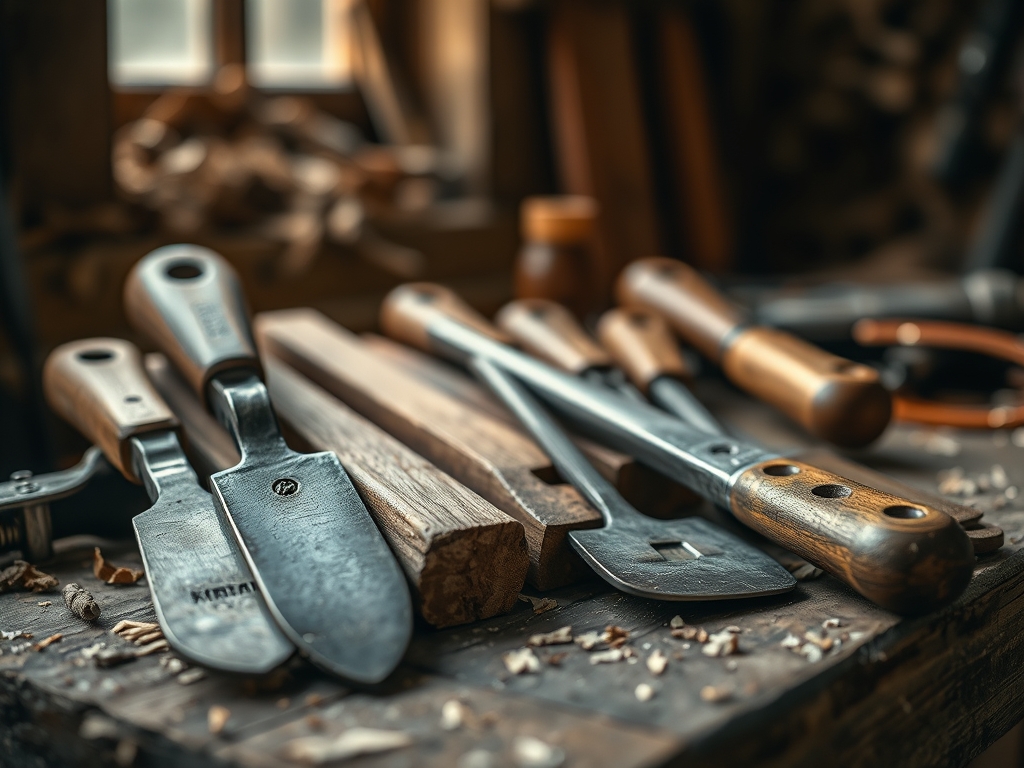
To master Integrated Creative Living, you need a kit that respects the laws of physics. My workbench is a curated ecosystem of high precision instruments. First, you need a set of digital calipers. You cannot guess measurements when you are dealing with mechanical tolerances; you need to know exactly how many millimeters of clearance you have for a flush fit. Next is the bone folder, essential for creating crisp, permanent creases in heavy gsm cardstock or leather without fracturing the fibers.
For material removal, I swear by my Japanese pull saw. Unlike Western saws, it cuts on the pull stroke, allowing for a thinner blade that generates less heat and a narrower kerf. This prevents the wood from scorching or binding. If you are working with textiles, a rotary cutter with a tungsten carbide blade is non-negotiable for maintaining a straight line across the bias of the fabric.
Material Substitutions: If you cannot source premium black walnut, look for cherry; it has a similar closed grain structure and finishes beautifully. If you lack a professional awl for leatherwork, a heavy duty sail needle can serve as a substitute, provided you use a thimble to manage the piercing force required to penetrate the hide.
THE TEMPO
The "Maker's Rhythm" is not about speed; it is about managing the viscosity and curing times of your materials. I divide my projects into three distinct phases. The first is the Structural Phase, which usually takes four to six hours. This is where the heavy lifting happens: the sawing, the drilling, and the initial assembly. You are fighting against the clock if you are using fast setting adhesives, so temperature control in your studio is vital.
The second phase is the Refinement Phase. This is the longest stretch, often spanning forty eight hours. It involves incremental sanding, moving from a coarse 80 grit up to a silky 400 grit. You have to allow the material to "rest" between sessions. Wood, for instance, can expand or contract based on the humidity released during sanding friction.
Finally, we hit the Integration Phase. This is where the piece is finished with oils or waxes and tested in its intended environment. A true maker knows that a project is not finished until it has survived forty eight hours of actual use. If a joint squeaks or a finish feels tacky, the molecular bond has not fully formed, and you need to troubleshoot the application.
THE CORE METHOD
1. Mapping the Grain and Fiber Direction
Before you make a single cut, you must identify the longitudinal axis of your material. For wood, this means reading the growth rings to ensure the highest structural integrity. If you cut against the grain, you risk "tear out," which happens when the blade lifts the fibers rather than severing them.
Mastery Tip: Use a magnifying loupe to inspect the vascular bundles in your timber. Cutting parallel to these bundles ensures that the piece can withstand vertical pressure without splitting along its natural fault lines.
2. Executing the Precision Pilot Hole
When joining two dense materials, the displacement of mass is your greatest enemy. If you drive a screw into a hardwood without a pilot hole, the internal pressure will cause the wood to check or split. Use a drill bit that matches the root diameter of your screw, leaving the threads to bite into the walls of the hole.
Mastery Tip: This is all about capillary action. If you are using wood glue, a slightly roughened interior surface in the pilot hole increases the surface area for the adhesive to grab, creating a bond stronger than the wood itself.
3. The Multi Stage Burnish
Finishing is not just about looks; it is about sealing the micropores of the material to prevent oxidation. Whether you are working with leather or wood, you want to use friction to generate heat. This heat melts the natural lignins or waxes, forcing them into the surface gaps.
Mastery Tip: Use a hardwood burnisher or a smooth glass slicker. The coefficient of friction creates a localized heat zone that "plasticizes" the surface fibers, resulting in a permanent, hydrophobic barrier.
THE TECHNICAL LEDGER
Maintenance & Longevity: To keep your creations in peak condition, apply a thin layer of microcrystalline wax every six months. Unlike standard beeswax, this synthetic wax has a higher melting point and is chemically neutral, meaning it won't yellow over time or attract dust.
Material Variations:
- Sustainable: Bamboo plywood offers incredible tensile strength and grows faster than hardwoods.
- Recycled: Reclaimed HDPE plastic can be melted and turned into high density handles that are virtually indestructible.
- Premium: Grade 5 Titanium is the gold standard for hardware due to its high strength to weight ratio and biocompatibility.
The Correction:
- The Gap: If a joint has a visible gap, mix fine sawdust with wood glue to create a "structural filler" that matches the refractive index of the surrounding wood.
- The Bloom: If your finish turns cloudy, it is trapped moisture. Use a heat gun on a low setting to draw the water out of the polymer matrix.
- The Strip: If you strip a screw head, use a left hand drill bit. The counter clockwise rotation will bite into the metal and back the screw out through sheer torque.
Studio Organization: Store your raw materials horizontally on a rack with at least three points of contact to prevent bowing or warping. For high carbon steel tools, include silica gel packets in your drawers to maintain a low humidity environment and prevent pitting corrosion.
THE FINAL REVEAL
Look at this finished piece! Can you feel the geometric harmony? Because we respected the ply of the material and used a consistent gauge for all the hardware, the object feels like a natural extension of the body. It is heavy enough to feel substantial but balanced enough to be ergonomic. When you practice Integrated Creative Living, you aren't just making "stuff." You are creating artifacts that carry the data of your own skill. The way the light hits that burnished edge is not an accident; it is the result of focused physics and a whole lot of love.
STUDIO QUESTIONS
How do I prevent wood from warping over time?
Maintain a consistent equilibrium moisture content by sealing all sides of the wood equally. This prevents uneven expansion and contraction caused by atmospheric humidity changes, which is the primary cause of structural cupping or twisting in organic materials.
What is the best way to sharpen a dull chisel?
Use a series of diamond whetstones ranging from 400 to 8000 grit. Maintain a consistent 25 degree bevel angle. Finish by stropping on leather with a polishing compound to achieve a "mirror edge" that severs fibers without crushing them.
Can I mix different types of wood in one project?
Yes, but you must account for their different shrinkage coefficients. Always align the grain directions so they expand and contract in unison. Using a "floating joinery" technique allows the wood to move without cracking the surrounding frame.
Why does my glue joint keep failing?
The most common cause is "starved joints" from over clamping. Excessive pressure squeezes all the adhesive out of the interfacial zone. Apply firm, even pressure, but ensure a thin film of glue remains to create a strong molecular bond.