The scent of freshly shaved cedar hits you before you even step through the door; it is a sharp, resinous perfume that signals the start of a productive day. There is something profoundly satisfying about the tactile resistance of a high density grain as you run your fingers along the surface. To keep this sanctuary running without a massive carbon footprint, I implemented The Sustainable Energy Plan to harness every photon hitting my roof. Transitioning to a sun-powered studio means my oscillating tools and soldering irons are fueled by pure, silent light rather than a buzzing grid.
Working with natural materials requires a specific kind of environmental awareness. When you are measuring the tensile strength of a leather strap or checking the moisture content of a hardwood slab with a digital meter, you realize that the energy used to shape these items should be as clean as the materials themselves. My shop operates on a delicate balance of voltage and craftsmanship. By aligning my heaviest power draws with peak UV hours, I have turned my workflow into a dance with the sun. It is about more than just being green; it is about the physics of independence and the raw joy of creating something beautiful with nothing but hand tools and captured starlight.
THE STUDIO KIT
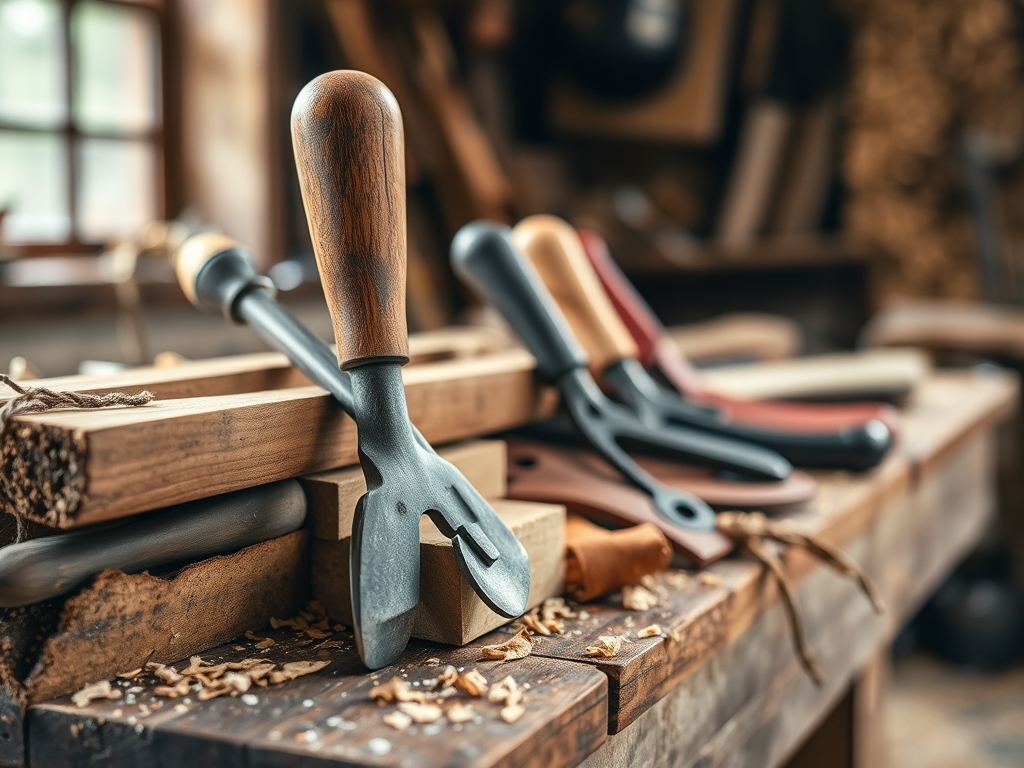
To execute a professional build while staying off the grid, your inventory must be precise. I rely on a monocrystalline silicon array because of its superior conversion efficiency compared to polycrystalline alternatives. This energy is stored in a Lithium Iron Phosphate (LiFePO4) battery bank, which offers a higher cycle life and better thermal stability than traditional lead-acid cells.
For the actual crafting, my bench is stocked with a digital caliper for thousandth-of-an-inch accuracy and a high-torque brushless DC motor rotary tool. These tools are significantly more energy-efficient, drawing less current while maintaining consistent RPMs under load. I also keep a set of tungsten carbide burrs and a heavy-duty bone folder for manipulating fibrous materials without causing structural fatigue.
Material Substitutions: If you cannot source premium vegetable-tanned leather, look for cork fabric or recycled felt. These materials have a high fiber density and respond well to mechanical fasteners. If solid brass hardware is out of reach, anodized aluminum provides excellent corrosion resistance and a high strength-to-weight ratio without the heavy energy cost of smelting traditional alloys.
THE TEMPO
The "Maker's Rhythm" is governed by the state of your battery charge. I divide my day into three distinct phases based on the photovoltaic cycle. The morning is for "Silent Work," which includes sketching, marking, and hand-tooling. This phase takes about two hours and preserves your stored energy for when the sun is higher in the sky.
Midday is the "Power Surge" phase. For three to four hours, I run the heavy machinery; the table saw, the drill press, and the vacuum systems. This is when the panels are producing more current than the batteries can even hold, allowing me to "live off the sun" in real time. The final phase is "The Burnish," a two-hour evening window dedicated to hand-finishing, oiling, and assembly. This structured approach ensures that you never hit a low-voltage disconnect in the middle of a critical cut.
THE CORE METHOD
1. Calibrating the Load
Before I flip a single switch, I calculate the watt-hour consumption of every tool on the bench. Using a kill-a-watt meter, I measure the "startup surge" of my lathe to ensure the pure sine wave inverter can handle the initial inductive load without tripping a breaker.
Mastery Tip: Inductive loads, like those in motors, require a massive initial burst of energy to overcome static friction. Always start your largest motor first to avoid sagging the voltage across the rest of your sensitive electronics.
2. Precision Marking and Scoring
Using a hardened steel awl, I scribe my lines directly into the material. This is more accurate than a pencil because the tip of the awl follows the cellular structure of the wood or the grain of the hide, creating a physical track for your cutting tool to follow.
Mastery Tip: Scribing creates a microscopic valley that guides the blade via mechanical registration. This prevents the "skipping" effect often seen when a rotary cutter hits a dense knot or a thick collagen bundle in leather.
3. Thermal Management in Machining
When using power tools on solar, heat is your enemy. I use low-friction lubricants on my saw blades to reduce the mechanical resistance. This reduces the amperage draw on the motor, making your battery bank last significantly longer during a heavy build.
Mastery Tip: Friction generates heat, which increases the electrical resistance in your tool's motor windings. By keeping blades sharp and lubricated, you maintain the tool's thermal efficiency, protecting both the motor and your power supply.
4. The Art of the Burnish
Finishing is where the piece truly comes alive. I use a high-speed burnishing wheel made of cocobolo wood. The friction generates just enough heat to fuse the fibers of the material together, creating a glass-like edge that is water-resistant and structurally sound.
Mastery Tip: This process relies on thermoplasticity. In leather, the natural tannins and waxes melt and redistribute under the heat of friction, creating a permanent, hardened seal through a process called fibrous compaction.
THE TECHNICAL LEDGER
Maintenance & Longevity: To keep a solar shop running, you must inspect your MC4 connectors for oxidation every six months. Use a multimeter to check for voltage drops across your fuses. A small drop indicates a loose connection, which creates heat and wastes precious energy.
Material Variations:
- Premium: Grade-A bridle leather and kiln-dried walnut (highest durability).
- Sustainable: Bamboo plywood and pineapple leather (excellent tensile strength).
- Recycled: Reclaimed pallet wood (requires careful scanning for metal inclusions with a magnetometer).
The Correction:
- The Mistake: Tool slows down during a cut. The Fix: Immediately stop. Check your battery state of charge. Low voltage can damage brushless motors.
- The Mistake: Burnt edges on the material. The Fix: Increase your feed rate or sharpen the bit. This is usually caused by dwell time where the tool rubs instead of cuts.
- The Mistake: Uneven finish. The Fix: Check your lighting. Solar shops often have fluctuating light; use LED task lamps with a high Color Rendering Index (CRI) to ensure even application.
Studio Organization: Store your materials in a climate-controlled zone. High humidity can cause wood to warp and leather to sprout mold. I use silica desiccant packs in my tool drawers to prevent rust on my high-carbon steel chisels and calipers.
THE FINAL REVEAL
There is a specific glow to a project finished under the power of the sun. When you hold the final piece, you can feel the structural integrity of the burnished edges and the smooth, precise fit of the joinery. It feels "honest." Using The Sustainable Energy Plan transforms the act of making from a hobby into a closed-loop system of creativity. Your studio becomes an ecosystem where the physics of the natural world and the mechanics of your tools live in perfect, high-energy harmony.
STUDIO QUESTIONS
How do I calculate my shop energy needs?
Sum the wattage of every tool you use simultaneously. Multiply by the hours of daily use to find your total watt-hours. Add a 20 percent safety margin to account for inverter efficiency loss and cloudy weather periods.
Can I run a welder on solar power?
Yes, but you need a high-discharge lithium battery bank and a powerful inverter. Welders draw massive amperage instantly. Ensure your system can handle the "peak surge" rating specified in the welder's technical manual.
What is the best battery for a workshop?
LiFePO4 (Lithium Iron Phosphate) is the gold standard. They handle deep discharges better than lead-acid, have a higher energy density, and remain stable under the heavy, fluctuating loads typical of power tools and machinery.
How do I prevent tool rust in a solar shed?
Maintain a stable microclimate. Use solar-powered fans for airflow to prevent condensation. Keep high-carbon steel tools lightly coated in camellia oil and store them in closed drawers with vapor-corrosion inhibiting (VCI) strips.
Does solar power affect tool performance?
If you use a pure sine wave inverter, your tools will run as well as, or better than, grid power. Cheap "modified sine wave" inverters can cause motors to run hot and electronic speed controllers to fail.