Close your eyes and listen to the silence of a studio that is actually working. Most people think making requires the high pitched whine of a table saw or the aggressive vibration of an orbital sander; however, I believe the true soul of a project lives in the quiet resistance of a hand plane against cherry wood. When you choose hand tools, you are making The Sustainable Maker Choice by eliminating the carbon footprint of electricity and the literal noise pollution of a motorized shop. There is a specific, visceral thrill when you feel the steel edge of a chisel bite into the grain. You can sense the cellular structure of the timber through the handle. This is not just about being old fashioned; it is about the physics of the material. Hand tools allow you to respond to the density and moisture content of your specific board in real time. You become a sensor, adjusting your pressure to prevent tear out before it even happens. It is intimate, it is green, and it is honestly much more badass.
THE STUDIO KIT
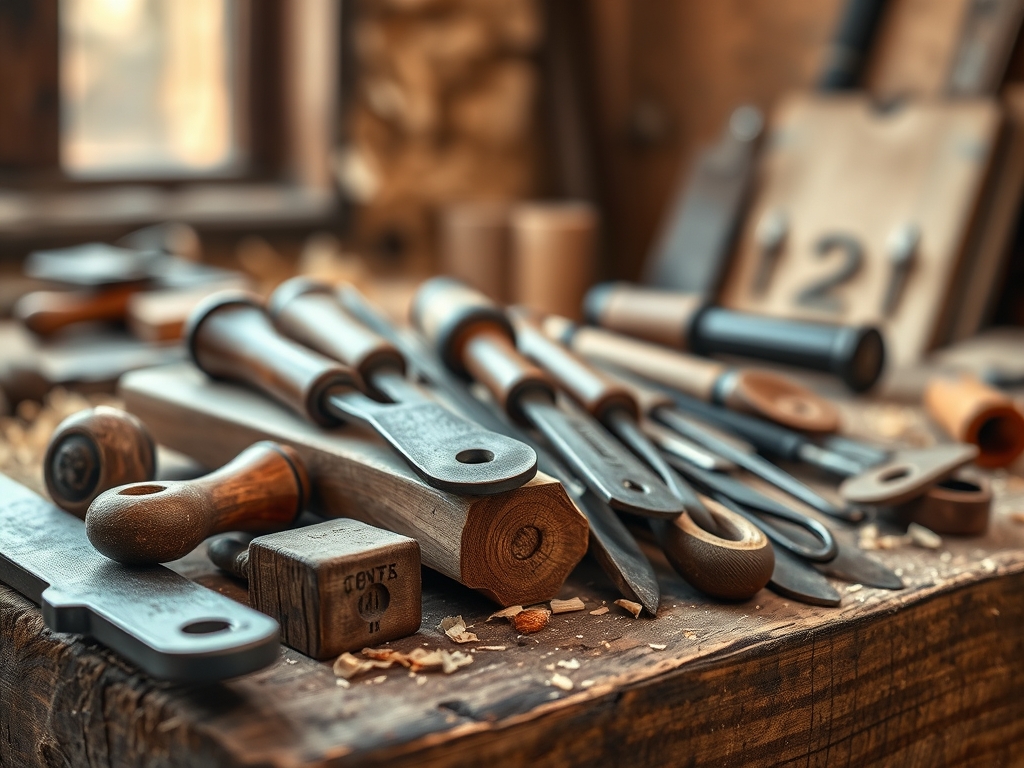
To master this manual approach, your kit must prioritize high carbon steel and ergonomic handles that translate force efficiently. Start with a Low-Angle Block Plane; its adjustable mouth allows you to tackle end grain without shattering the lignin fibers. You will also need a set of Bench Chisels with a high Rockwell hardness rating to maintain a razor edge against dense hardwoods. For measurements, skip the plastic tape and grab a Stainless Steel Rule and a pair of Outside Calipers to ensure precision to the thousandth of an inch.
Material Substitutions: If you cannot source reclaimed White Oak, look for Black Walnut or Hard Maple. These species offer high tensile strength and predictable grain patterns. For finishes, avoid petroleum based polyurethanes. Instead, use a Burnishing Bone or a Hand-Rubbed Linseed Oil. This creates a breathable, porous surface that ages gracefully rather than cracking over time.
THE TEMPO
The Maker's Rhythm is a fundamental shift in how we perceive productivity. In a power tool shop, the tempo is dictated by the RPM of the motor. In a hand tool studio, the tempo is dictated by your own heart rate and the resistance of the medium. Expect the Dimensioning Phase to take three times longer than it would with a jointer. You are truing a face by hand, using a Winding Stick to check for twists.
The Joinery Phase is where the rhythm slows down even further. This is a meditative state where you are matching the gauge of your saw kerf to the thickness of your pencil line. While it takes longer to finish a piece, you save hours on the back end because you are not sanding out machine marks or dealing with the "fuzzy" grain caused by high speed friction. The total time investment for a small cabinet might be forty hours, but every minute is spent in a state of high cognitive engagement rather than mindless automation.
THE CORE METHOD
1. Establishing the Reference Face
The journey begins by identifying the most stable side of your timber. Use a Jack Plane to remove high spots, working diagonally across the grain to prevent deep gouges. You are looking for a perfectly flat plane that serves as the foundation for all subsequent measurements.
Mastery Tip: This relies on the physics of Mechanical Advantage. By using a longer plane sole, you are essentially creating a bridge that spans the valleys of the wood, ensuring that only the peaks are sheared away until the surface is uniform.
2. Scribing the Joinery
Forget the pencil; use a Marking Gauge with a hardened steel wheel. This tool actually severs the wood fibers, creating a physical "trench" for your saw to follow. This prevents the wood from splintering when you begin your cut.
Mastery Tip: This technique utilizes Fiber Severance to control the direction of the break. By pre-cutting the surface cells, you ensure that the energy of the saw remains trapped within the designated waste area, protecting the structural integrity of your joint.
3. Executing the Saw Cut
Using a Dovetail Saw with a high TPI (teeth per inch), start your cut on the far corner and pull back lightly to establish a track. Maintain a light grip; the weight of the saw should do the work. If you force it, the blade will heat up and expand, causing it to bind in the kerf.
Mastery Tip: This is a lesson in Thermal Expansion and friction. A sharp, well-set saw minimizes the heat generated during the stroke, keeping the thin steel blade rigid and true throughout the entire depth of the cut.
4. Refining with the Chisel
Once the bulk of the waste is removed, use a chisel to pare back to your scribed line. Work in small increments, taking thin shavings rather than large chunks. This is where the final fit is established, requiring a steady hand and a sharp eye for the alignment of the mating parts.
Mastery Tip: This process exploits Cleavage Planes. By working parallel to the grain, you are separating the wood at its weakest molecular bonds, allowing for an incredibly smooth finish that requires zero sandpaper.
THE TECHNICAL LEDGER
Maintenance & Longevity: Hand tools require a dedicated sharpening routine. Invest in a series of Waterstones ranging from 1,000 to 8,000 grit. A tool is only as good as its edge; a dull chisel is a dangerous tool because it requires excessive force, which leads to slips.
Material Variations:
- Sustainable: Reclaimed barn wood or "city timber" from fallen trees.
- Recycled: Repurposed tool steel for making your own scrapers.
- Premium: Air-dried lumber, which retains better color and working properties than kiln-dried stock.
The Correction:
- The Gap: If a joint is too loose, do not use wood filler. Glue a thin shaving of the same wood into the gap and re-cut.
- The Split: If the wood checks at the end, use a Butterfly Inlay to mechanically arrest the crack.
- The Twist: If a board warps, use a Scrub Plane to aggressively re-level the surface before finishing.
Studio Organization: Store your steel tools in a wooden chest lined with felt infused with camellia oil. This prevents oxidation and rust. Keep your lumber stacked horizontally with "stickers" (small wood spacers) between layers to allow for airflow and prevent moisture buildup.
THE FINAL REVEAL
The finished piece is a testament to human patience and The Sustainable Maker Choice. When you run your hand over a surface finished with a Smoothing Plane, it feels like silk, not plastic. There is a depth to the grain that machines simply cannot replicate because they crush the fibers rather than slicing them. The joints are tight, the edges are crisp, and the entire object feels "alive" because it was crafted in harmony with the natural properties of the wood. You didn't just make a thing; you mastered a material.
STUDIO QUESTIONS
Why are hand tools better for the environment?
Hand tools eliminate electricity consumption and reduce industrial waste. They produce large wood shavings that are easily composted or repurposed, unlike the fine, toxic dust clouds generated by high speed power sanders and electric saws.
Can I achieve professional precision without motors?
Yes, hand tools often provide superior precision. Tools like marking gauges and specialty planes allow for adjustments at the sub-millimeter level. This creates tighter mechanical bonds and more durable joinery than standard consumer grade power equipment.
What is the best wood for a beginner?
Poplar or Soft Pine are excellent starting points. They have lower density and straight grain, making them easy to plane and chisel while you develop the muscle memory required for more difficult, high-tensile hardwoods like Oak.
How do I keep my tools from rusting?
Apply a thin layer of camellia oil or paste wax after every session. Store them in a climate controlled environment and use a dehumidifier in your studio to keep the relative humidity around fifty percent to prevent oxidation.