The smell of raw cedar and beeswax is the first thing that hits you when you walk into my studio; it is the scent of a brain finally slowing down. I used to think I needed a thousand gadgets to be happy. I was wrong. True satisfaction comes from the friction of a sharp blade against a dense grain. Healing Through Simple Living is not just a trendy phrase; it is a physiological response to the tactile reality of hand-tool woodworking. When you hold a piece of kiln-dried walnut, you are feeling the cellular structure of a living organism that has been stabilized at exactly six percent moisture content. That stability is infectious. Your pulse drops. Your focus narrows to the width of a single wood shaving. By stripping away the digital noise and focusing on the tensile strength of natural fibers, I realized that my desire for more stuff was actually a hunger for more meaning. Making things by hand cured my consumerism because it taught me the true cost of quality.
THE STUDIO KIT
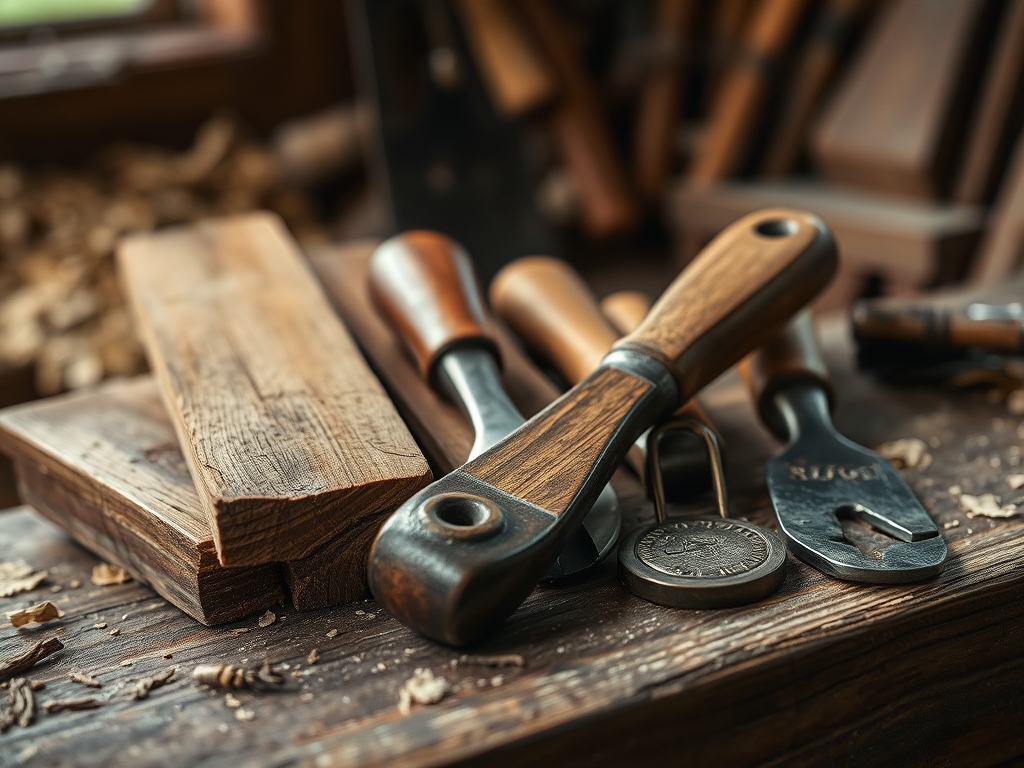
To begin this journey into minimalist construction, you need a kit that respects the physics of the material. We are working with high-tannin hardwoods and vegetable-tanned leather today. You will need a marking gauge for precision layout; this tool ensures your lines are physically cut into the fibers rather than just drawn on top. Grab a Japanese pull saw with a high TPI (teeth per inch) count for cross-cutting without splintering the delicate lignin. For the leather components, a diamond-point awl is non-negotiable for creating clean apertures without tearing the hide.
Material Substitutions: If you cannot source walnut, look for cherry or maple. These are diffuse-porous woods, meaning their vessels are small and evenly distributed, which makes them easier to carve than ring-porous woods like oak. For the binding, if leather is unavailable, a high-gauge waxed linen thread offers incredible tensile strength and will not stretch over time like synthetic nylon.
THE TEMPO
The Maker's Rhythm is a three-act play that cannot be rushed. Phase one is the Acclimatization Phase, which takes 48 hours. You must let your wood sit in your studio environment so its moisture content equilibrates with the local humidity. If you skip this, your joints will shrink or swell, ruining the structural integrity of the piece. Phase two is the Execution Phase, roughly six hours of active labor. This is where you enter a flow state, guided by the sound of the tool. A sharp chisel should make a "shushing" sound as it severs the wood cells. Phase three is the Curing Phase, another 24 hours for the natural oils to polymerize and harden into a protective barrier.
THE CORE METHOD
1. The Precision Layout
Use your marking gauge to scribe lines parallel to the grain. Because wood is an anisotropic material, it has different properties in different directions. Scribing across the grain severs the longitudinal tracheids, preventing the wood from "fuzzing" when you eventually make your cut.
Mastery Tip: Always scribe slightly deeper than you think you need. This creates a physical "wall" for your saw or chisel to register against, utilizing the tool's geometry to ensure a perfectly square edge.
2. Managing the Kerf
When you begin your cut with the pull saw, remember that the kerf (the width of the saw blade) must stay on the "waste" side of your line. If you saw directly on the line, your finished piece will be short by exactly the thickness of the blade.
Mastery Tip: Use a thumbnail as a guide for the first few strokes. The physics of the pull-stroke saw means the blade is under tension during the cut, which prevents buckling and allows for a much thinner, more precise blade.
3. The Art of the Burnish
After shaping your edges with a spokeshave, you must burnish them. This is the process of compressing the surface fibers to create a natural sheen without the need for heavy chemical varnishes. Use a smooth piece of bone or a specialized glass burnisher.
Mastery Tip: Burnishing works through friction and pressure. By compressing the cellular structure, you decrease the surface area available for moisture absorption, which significantly increases the longevity of the wood.
4. Tensioning the Binding
When joining the leather to the wood, use a "saddle stitch" with two needles. This creates a mechanical lock; even if one thread breaks, the entire seam will not unravel. Use a bone folder to crease the leather along its natural break.
Mastery Tip: Leather is composed of collagen fibers. By dampening the leather slightly before folding, you allow these fibers to slide past each other, preventing the grain from cracking under the stress of a sharp 90-degree bend.
THE TECHNICAL LEDGER
Maintenance & Longevity: Treat your finished piece with a mixture of linseed oil and carnauba wax every six months. This maintains the hydrophobic barrier and keeps the fibers supple. Avoid direct sunlight, as UV radiation breaks down the lignin in the wood, leading to "silvering" and brittleness.
Material Variations:
- Sustainable: Use reclaimed heart pine from old barns. It has a high resin content that acts as a natural preservative.
- Premium: Bog Oak, which has been preserved in peat bogs for thousands of years, offers a unique chemical density and a natural black hue.
The Correction:
- The Gap: If your joint has a small gap, mix fine sanding dust with wood glue to create a structural filler that matches the wood's refractive index.
- The Tear-out: If the wood splinters, stop immediately. Your blade is dull. Sharpen to a 30-degree bevel and approach from the opposite direction.
- The Scuff: For deep leather scratches, use the heat from your thumb to move the natural oils back into the abrasion.
Studio Organization: Store your wood vertically to prevent bowing. Keep your leather in a temperature-controlled environment; high heat will cause the natural fats to "spew" or crystallize on the surface, requiring a tedious cleaning process with a horsehair brush.
THE FINAL REVEAL
Look at that! You have created something that feels heavy, intentional, and permanent. The way the light catches the burnished edges isn't just "pretty"; it is a visual representation of compressed fiber density. This piece doesn't just sit on a shelf; it demands that you notice the texture of the grain and the strength of the stitch. When you make something this solid, you realize you don't need five cheap versions of it. You just need this one. That is the ultimate secret of the studio: quality reduces the need for quantity.
STUDIO QUESTIONS
Why does my wood keep splitting during the carving process?
Splitting usually occurs because you are carving against the grain or your tools are dull. Ensure you are working in the direction of the fibers and maintain a razor-sharp edge to cleanly sever the lignin without causing stress fractures.
How do I know if my leather is high quality?
Look for "full-grain" leather. This contains the entire epidermal layer, providing maximum durability and a visible pore structure. If the surface looks like plastic or lacks natural imperfections, it is likely a corrected-grain leather with lower tensile strength.
Can I use power tools for this specific project?
While possible, power tools generate high heat that can scorch delicate hardwoods and melt the natural waxes in leather. Hand tools allow for micro-adjustments and a tactile feedback loop that power tools simply cannot replicate for precision work.
What is the best way to sharpen my marking awl?
Use a fine-grit whetstone and rotate the awl consistently to maintain a conical point. A sharp awl should slice through the leather fibers with minimal pressure, preventing the "puckering" effect often seen with dull, factory-grade tools.