The scent of freshly shaven cedar and the cool, oily slick of a polished steel chisel are the only alarms I need. There is a specific, visceral weight to a piece of raw walnut before it meets the blade; it possesses a dense tensile strength that demands respect. If you do not respect the grain, the wood will shatter your heart and your project. To master this, you need an Integrated Maker Schedule that balances the explosive energy of the rough cut with the meditative stillness of the final sand. Most creators burn out because they treat their studio time like a sprint, but high-end making is a marathon of thermal dynamics and structural integrity. You have to feel the friction heat up the wood fibers and know exactly when to pull back before the cellular structure scorches. We are not just building objects; we are manipulating the physical properties of the earth to fit a human aesthetic. Grab your safety goggles, because we are diving deep into the beautiful, gritty physics of the craft.
THE STUDIO KIT
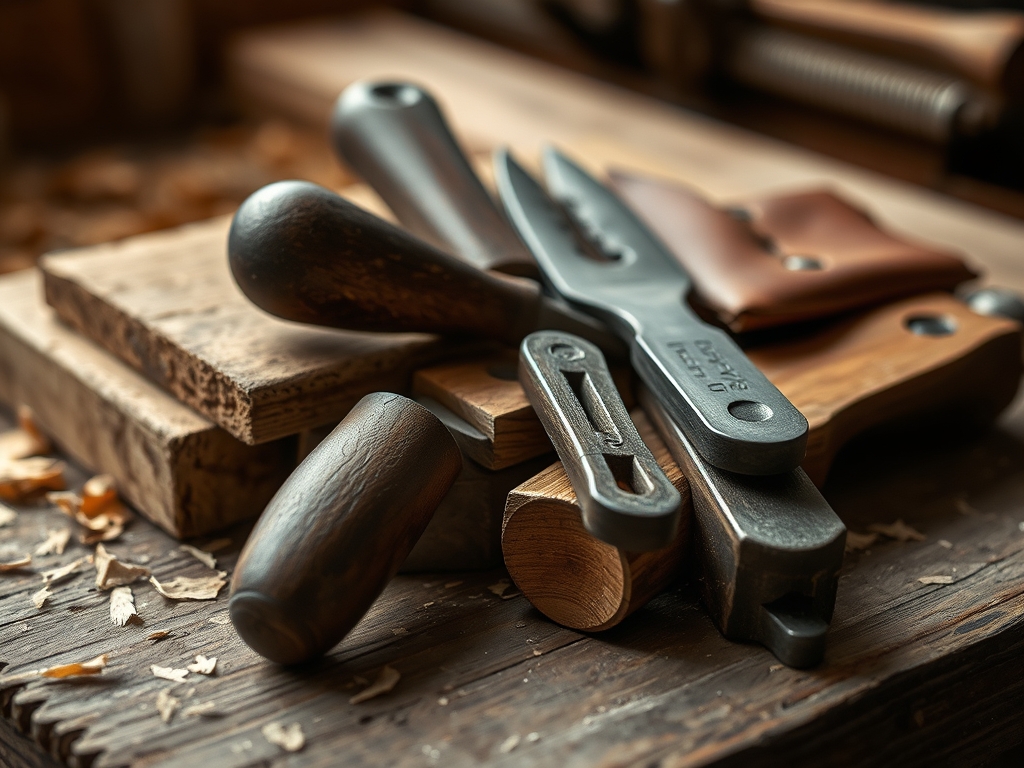
To execute this workflow, your bench must be a curated ecosystem of precision. Start with a set of digital calipers to measure thickness down to the micron; wood expands with humidity, and a fraction of a millimeter can ruin a mortise and tenon joint. You will need a high-carbon steel marking awl for scribing lines that the blade can follow with surgical accuracy. For the textile components, a bone folder is non-negotiable for creating crisp, permanent creases in high-gsm paper or heavy canvas without breaking the surface fibers.
Material Substitutions are your best friend when the budget is tight or the supply chain fails. If you cannot source premium white oak, look for ash; it offers similar elasticity and a prominent grain pattern that takes stain beautifully. If a rotary cutter is unavailable for your leather work, a freshly stropped round knife provides even more control over the shear force required for thick hides. Always keep a bottle of isopropyl alcohol on hand to strip oils from metal surfaces before bonding; even a fingerprint can compromise the chemical adhesion of industrial epoxies.
THE TEMPO
The Maker's Rhythm is a three-part harmony of preparation, execution, and recovery. The first phase, the "Deep Prep," takes roughly twenty percent of your time. This involves calibrating your oscillating tool and checking the squareness of your fences. If your tools are out of alignment by even half a degree, that error compounds geometrically over the life of the build.
The "Flow State" is the core sixty percent of the schedule. This is where the heavy lifting happens. You are managing the hygroscopic nature of your materials, ensuring that wood or leather stays at a consistent moisture level to prevent warping. Finally, the "Curing Phase" occupies the last twenty percent. This is the hardest part for any high-energy maker because it requires doing absolutely nothing. Whether you are waiting for wood glue to reach its maximum cross-linking density or for a finish to outgas, rushing this stage results in structural failure.
THE CORE METHOD
1. Scribing the Foundation
Before the first cut, use your marking awl to break the surface fibers of your material. This creates a physical channel for your saw or knife, preventing "tear-out" where the grain splinters away from the body. Observe the alignment in the step-by-step photos below to see how a deep scribe line acts as a mechanical guide.
Mastery Tip: This technique utilizes directional fracture mechanics. By pre-weakening the surface at a specific point, you ensure that the energy of the cutting tool dissipates along a controlled path rather than shattering the surrounding cellular walls.
2. The Primary Reduction
Using a jeweler's saw or a bandsaw, remove the bulk of the waste material. Keep your blade at a ninety-degree angle to the workpiece to maintain perpendicular integrity. If you are working with metal, use a lubricant to reduce thermal expansion, which can cause the blade to bind and snap within the kerf.
Mastery Tip: Focus on the surface feet per minute (SFM). Every material has a specific speed where the tool cuts most efficiently without generating excess heat. Exceeding this speed causes "work hardening" in metals, making them nearly impossible to file later.
3. Refinement and Joinery
This is where the ergonomic design of your hand tools shines. Use a block plane or a fine-grit rasp to bring the piece to its final dimensions. Test your joints frequently. A "piston fit" is the goal; the air should hiss as the pieces slide together, indicating a gap smaller than the thickness of a human hair.
Mastery Tip: Leverage capillary action when applying adhesives. A perfectly fitted joint will pull the liquid glue deep into the pores of the material through surface tension, creating a bond that is actually stronger than the surrounding fibers.
4. Surface Compression and Burnishing
For the final finish, do not just sand; burnish. Use a smooth, hard object like a polished stone or a specialized burnishing tool to compress the surface fibers. This increases the surface density and creates a natural luster that reflects light more uniformly than a chemical coating.
Mastery Tip: Burnishing works through plastic deformation. You are not removing material; you are rearranging the surface molecules into a flatter, more reflective plane, which significantly increases the item's resistance to moisture and wear.
THE TECHNICAL LEDGER
Maintenance & Longevity: Your steel tools are prone to oxidation. Wipe them down with a thin coat of camellia oil after every session. This creates a hydrophobic barrier that prevents rust from pitting the precision-ground surfaces. For your sharpening stones, ensure they are flattened regularly using a diamond plate to maintain a true 180-degree surface.
Material Variations:
- Sustainable: Bamboo offers incredible compressive strength but requires specialized carbide-tipped blades because of its high silica content.
- Recycled: Reclaimed timber often contains hidden ferrous inclusions (nails). Use a metal detector to prevent catastrophic tool failure.
- Premium: Grade A vegetable-tanned leather has a high tannin density, making it ideal for deep tooling and structural molding.
The Correction:
- The Gap: If a joint is too loose, do not just add more glue. Insert a thin "shim" of the same material to restore mechanical friction.
- The Burn: If your drill bit leaves a scorch mark, your feed rate is too slow. Increase pressure or sharpen the flutes to reduce frictional heat.
- The Warp: If a panel cups, it is likely due to uneven moisture loss. Wet the concave side and apply heat to encourage the fibers to expand back into a neutral state.
Studio Organization: Store your active projects in a climate-controlled zone with a consistent relative humidity of forty-five percent. Use vertical racking to prevent "creep," which is the slow deformation of materials under their own weight over time.
THE FINAL REVEAL
There is nothing quite like the moment the final piece sits on the bench, glowing under the studio lights. When you follow a disciplined schedule, the finished object feels inevitable rather than accidental. You can feel the structural balance in your hands; it is solid, purposeful, and mathematically sound. The transition from the raw, chaotic energy of the materials to the refined elegance of the final form is the ultimate maker's high. You have successfully navigated the laws of physics to create something that did not exist yesterday. Now, take a breath, clean your station, and let the tools rest. You earned it.
STUDIO QUESTIONS
How do I prevent wood from splitting during the build?
Always pre-drill holes slightly smaller than your screw diameter. This reduces the hoop stress exerted on the wood fibers. Maintaining consistent humidity in your studio also prevents the internal tension that leads to catastrophic checking or splitting along the grain.
What is the best way to clean precision tools?
Use a stiff nylon brush to remove debris, followed by a wipe of high-purity isopropyl alcohol. This removes skin oils that cause corrosive pitting. Finish with a light application of mineral oil to seal the metal against atmospheric moisture.
Why does my glue keep failing on oily woods?
Species like teak or cocobolo contain natural resins that inhibit chemical bonding. Wipe the joint surfaces with acetone immediately before applying glue to strip the surface oils, allowing the adhesive to penetrate the porous structure of the wood.
How often should I sharpen my hand chisels?
Sharpen as soon as you feel increased cutting resistance. A dull blade requires more force, which decreases your control and increases the risk of slipping. A truly sharp edge should shave hair effortlessly, indicating a microscopic apex radius.