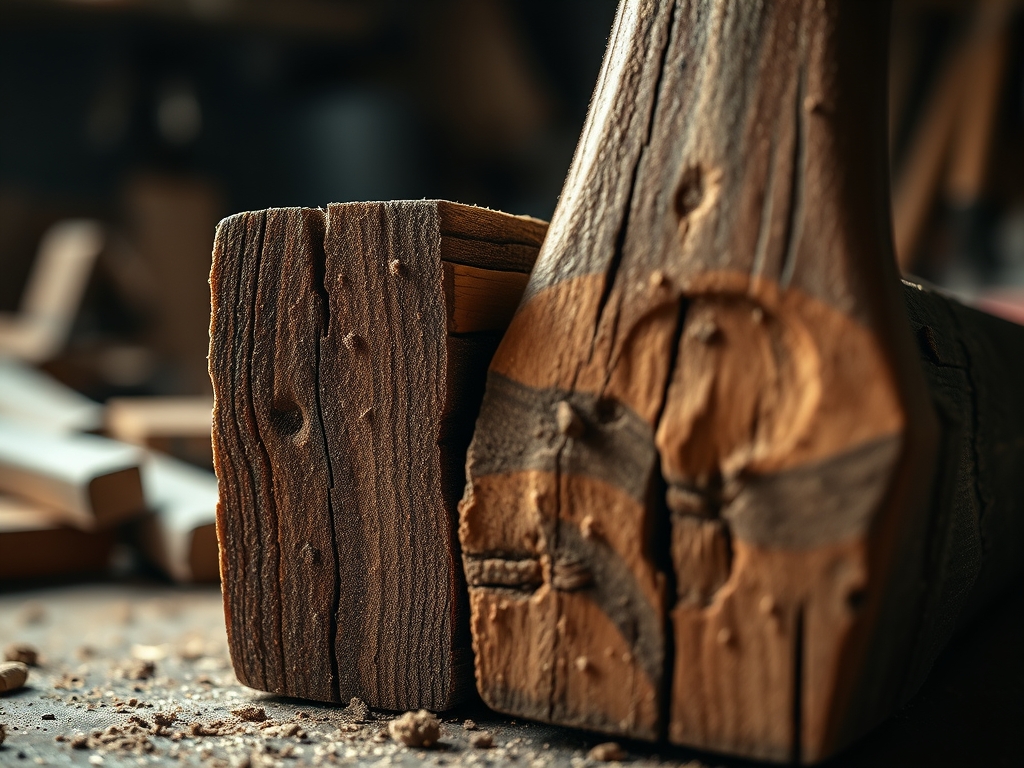

Listen to that sound. It is the crisp, rhythmic bite of a Japanese pull saw meeting a block of kiln dried black walnut. There is a specific frequency to it; a high pitched zip that tells you the moisture content is exactly where it needs to be for a clean shear. When the world gets too loud and my brain feels like it has sixty tabs open at once, I retreat to this bench. This is where I find The Holistic Maker Mindset. It is not just about making a "thing." It is about the physical dialogue between my hands and the material. Whether I am feeling the tensile strength of a leather hide or measuring the grain direction of a hardwood board, the sensory input grounds me. My anxiety cannot survive the focus required to use a marking gauge with sub-millimeter precision. When you are calculating the displacement of a resin pour or the shear force of a joint, there is no room for intrusive thoughts. The workshop is my cathedral of logic.
THE STUDIO KIT
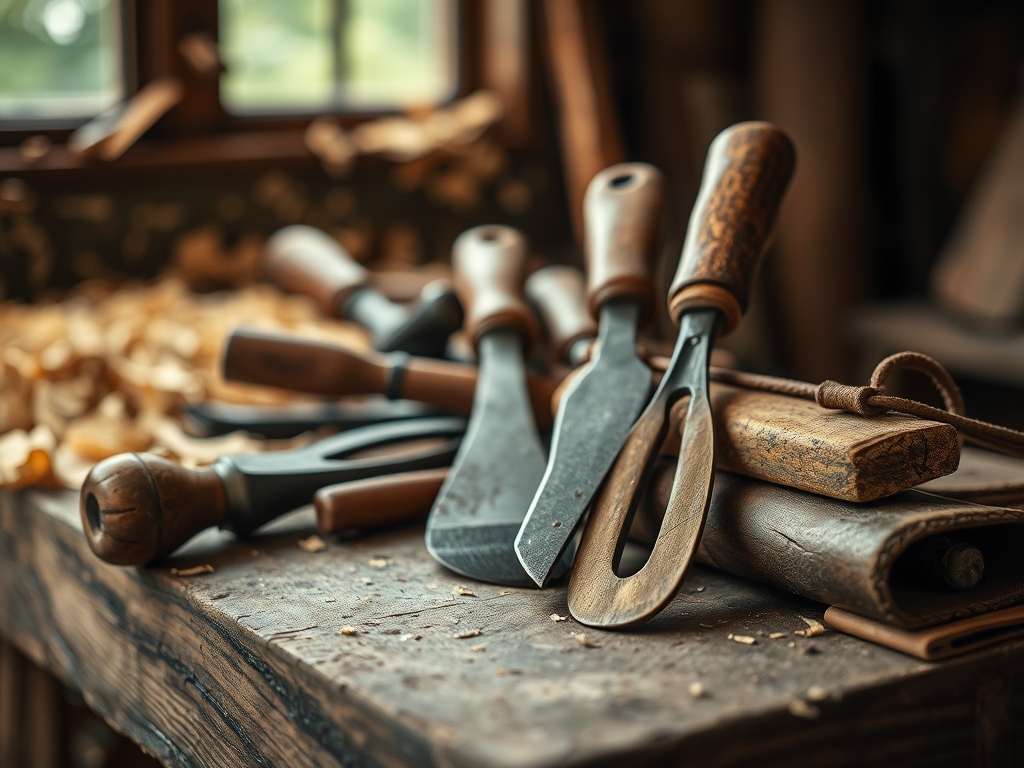
To achieve this level of mental clarity, your kit must be an extension of your nervous system. We are focusing on a hybrid project today: a bespoke, brass-inlaid valet tray that tests your ability to manage different thermal expansion coefficients. You will need a set of digital calipers for precise depth checks and a high quality marking knife rather than a pencil; a knife line severs the wood fibers, preventing "tear-out" during the cut.
For the base, seek out quartersawn oak or walnut. Quartersawn timber is more dimensionally stable because the growth rings are perpendicular to the face, reducing the risk of warping. You will also need C360 brass flat stock, a jeweler's saw with 2/0 blades, and a variety of silicon carbide sandpaper grits ranging from 120 to 1000.
Material Substitutions: If you cannot source brass, 6061 aluminum offers a similar tactile experience but is much softer and easier to sand. If hardwood is unavailable, high density Baltic Birch plywood is a fantastic alternative; its cross-banded layers provide incredible compressive strength and a unique aesthetic when the edges are exposed and polished.
THE TEMPO
The "Maker's Rhythm" is a three-act play that dictates the flow of your dopamine. Do not rush the induction phase. This is the first two hours where you are simply squaring your stock and layout. It is slow, methodical, and requires high cognitive load. You are setting the "bones" of the project.
The second phase is the flow state, typically lasting four to six hours. This is the bulk of the manual labor; the sawing, the chiseling, and the initial sanding. Your heart rate actually stabilizes during this period as the repetitive motions trigger a parasympathetic nervous system response. Finally, the refinement phase takes about three hours. This is the "slow down" period where you apply finishes and burnish edges. Total project time is roughly eleven hours, spread over a weekend to allow for glue polymerization and wood movement.
THE CORE METHOD
1. The Precision Layout
Use your marking knife and a steel square to scribe your inlay channels. Unlike a graphite line, a physical scribe provides a "track" for your chisel to follow. Mastery Tip: This relies on the principle of mechanical registration. By creating a physical shoulder in the wood fibers, you are ensuring that your tool cannot wander, which maintains the structural integrity of the thin walls between your inlay slots.
2. Clearing the Channel
Using a narrow bench chisel, remove the waste material between your scribe lines. Work in shallow passes to avoid "wedging," which occurs when the thickness of the chisel blade exerts too much lateral pressure and splits the grain. Mastery Tip: This is all about cleavage planes. Wood is essentially a bundle of straws held together by lignin; you must always cut across the straws first to prevent them from splitting uncontrollably down the length of the board.
3. Sizing the Inlay
Measure your brass stock with your calipers. It should be approximately 0.05mm wider than your channel. This creates an interference fit, where the friction alone holds the metal in place. Mastery Tip: Metals possess a higher Young's Modulus than wood, meaning they are much stiffer. If your fit is too tight, the brass will act as a wedge and crack your timber as the wood naturally shrinks with humidity changes.
4. Adhesive Bonding
Apply a thin layer of two-part epoxy into the channel. Do not over-apply; you want to avoid "hydrostatic lock," where the glue prevents the inlay from seating fully. Mastery Tip: Epoxy works through cross-linking polymers. Unlike PVA glue which dries by evaporation, epoxy creates a chemical bridge between the porous wood cells and the scuffed surface of the metal, ensuring a permanent bond regardless of temperature swings.
5. Leveling and Polishing
Once the epoxy has cured for 24 hours, use a flat-bottomed block plane or a file to bring the brass flush with the wood. Progress through your sandpaper grits. Mastery Tip: This is the study of surface topology. Each successive grit of sandpaper replaces deep scratches with shallower ones until the scratches are smaller than the wavelength of visible light, resulting in a mirror finish on the metal and a "chatoyant" glow in the wood.
THE TECHNICAL LEDGER
Maintenance & Longevity: To keep your workbench tools in peak condition, wipe all steel surfaces with camellia oil. This organic oil is non-drying and creates a moisture barrier that prevents oxidation without staining your wood projects. Check the "flatness" of your sharpening stones monthly using a diamond lapping plate.
Material Variations:
- Sustainable: Use reclaimed "sinker" cypress, which has been preserved in anaerobic river bottoms for centuries, offering incredible rot resistance.
- Premium: Incorporate Grade 5 Titanium accents if you have the carbide tooling to handle the extreme hardness and low thermal conductivity.
The Correction:
- The Gap: If your inlay has a visible gap, mix fine sawdust from the same wood species with clear resin to create a "color-matched" filler that disappears once sanded.
- The Tear-out: If the wood grain rips, use a drop of cyanoacrylate (CA) glue to "freeze" the fibers in place before re-sanding.
- The Oxidation: If your brass dulls during the final oiling, a tiny amount of white vinegar on a cotton swab will strip the oxidation without damaging the wood finish.
Studio Organization: Store your timber horizontally in a temperature-controlled environment. Vertical storage leads to "bowing" due to the gravitational load on the cellular structure over time. Keep your metal stock in airtight bins with desiccant packets to prevent surface pitting.
THE FINAL REVEAL
Look at that! The way the light catches the brass inlay against the deep, chocolatey tones of the walnut is pure magic. When you run your thumb across the surface, you cannot even feel the transition between metal and wood. That is the result of your discipline and your understanding of material science. You took raw, disparate elements and forced them into a singular, harmonious object. Your heart rate is down, your focus is sharp, and you have a physical artifact that proves you are capable of absolute precision. That is the power of the bench.
STUDIO QUESTIONS
What is the best way to prevent wood from warping?
Ensure your lumber is dried to a 6-8% moisture content and use quartersawn cuts. Always seal both sides of the piece simultaneously to ensure even moisture exchange with the environment, which prevents internal tension and "cupping."
Why use a marking knife instead of a pencil?
A marking knife severs the lignin and cellulose fibers, creating a physical boundary. This prevents "grain following" when you begin your cut and provides a microscopic "V" groove that seats your saw or chisel with absolute accuracy.
How do I fix a loose metal inlay?
If an interference fit fails, use a high-viscosity epoxy. Scuff the back of the metal with 80-grit sandpaper to increase the surface area for the chemical bond. This creates "mechanical teeth" that the resin can grip effectively.
What is the most important tool for a beginner?
Invest in a high-quality set of digital calipers. Understanding the exact dimensions of your materials to the thousandth of an inch allows you to diagnose fitment issues before they become permanent mistakes in your assembly.