Imagine the feeling of a blade gliding through top-grain leather as if it were warm butter. There is no resistance; there is only the rhythmic, quiet hiss of steel parting fibers. When your edge is truly honed, you do not just cut; you manipulate the molecular structure of your medium with absolute precision. To achieve this level of mastery, you must adopt an Integrated Tool Care Routine that treats your equipment as an extension of your own nervous system. It is not just about a quick pass on a stone. It is about understanding the physics of the apex. When the bevel of your chisel or the curve of your rotary blade is maintained with holistic intent, the tactile feedback through the handle changes entirely. You stop fighting the material and start dancing with it. We are going to dive deep into the science of the edge, ensuring every tool in your studio performs at its peak tensile potential.
THE STUDIO KIT
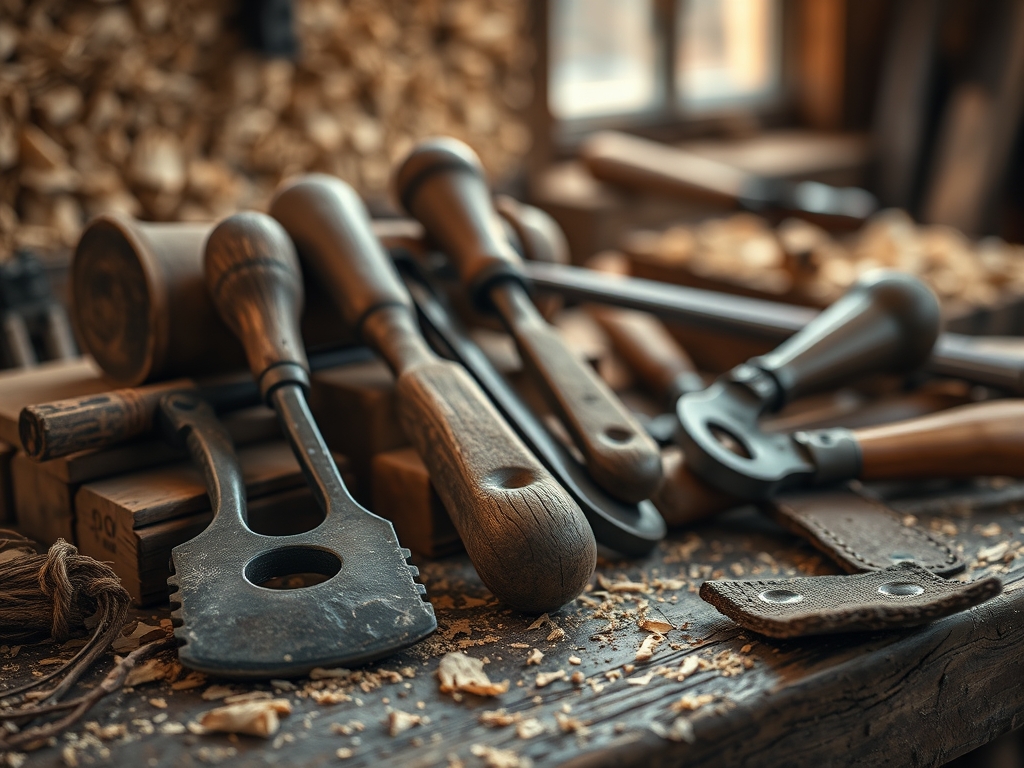
To maintain a professional edge, your kit must address both the removal of metal and the alignment of the microscopic teeth that form a blade. You will need a high-density whetstone set (1000/6000 grit is the gold standard) to manage the geometry of the primary bevel. For final polishing, a leather strop loaded with chromium oxide compound is non-negotiable; this acts as a micro-abrasive to burnish the steel. You should also keep a set of digital calipers on hand to measure the consistency of your blade angles, ensuring you are not rounding off the edge over time.
For those working with softer materials, a bone folder and a high-quality awl are essential for marking and piercing without tearing the grain. If you are missing a specific sharpening stone, a Material Substitution can be made using ultra-fine automotive sandpaper (2000 grit) mounted on a piece of float glass. This provides a perfectly flat surface for "scary sharpening," a technique that mimics the precision of a jeweler's saw on a microscopic scale. Always have honing oil or distilled water ready to act as a lubricant, reducing friction and preventing the steel from overheating, which can ruin the temper.
THE TEMPO
The Maker's Rhythm is a three-phase cycle that balances production with preservation. The first phase is the Pre-Flight Calibration, which takes roughly five minutes. This is where you inspect your tools for nicks or rolls under a bright LED light. The second phase is the Active Maintenance, occurring every thirty minutes of hard use. This thirty-second stropping session realigns the burr and keeps the edge "sticky" sharp.
Finally, the Deep Restoration phase happens at the end of a project or once a week. This requires about forty-five minutes of focused work to regrind bevels and oil wooden handles. By integrating these intervals into your workflow, you prevent the exponential degradation of your tools. A dull tool requires more force, which increases the risk of slipping and destroying your workpiece. Respecting the tempo ensures your ergonomic health and the longevity of your equipment.
THE CORE METHOD
1. Establishing the Primary Bevel
The first step is to lock your tool into a consistent angle against the coarse stone. Use your calipers to verify the factory angle, usually between 20 and 30 degrees. By maintaining a rigid wrist and using your entire arm to move the tool, you ensure a flat, even surface. Observe the alignment in the step-by-step photos below to see how the slurry begins to form.
Mastery Tip: This process relies on abrasive friction. As the stone wears away the steel, it creates a "burr" or wire edge. You must feel for this microscopic ridge of metal along the entire length of the blade to ensure you have reached the apex.
2. Refining the Micro-Bevel
Switching to your 6000-grit stone, you will now focus on the very tip of the edge. This stage is about polishing rather than grinding. Use light pressure to avoid "dubbing" the edge, which is the accidental rounding of the sharp point. The goal here is to reduce the surface roughness to a mirror finish.
Mastery Tip: This stage utilizes capillary action. The lubricant on your stone holds the microscopic metal particles (swarf) in suspension, preventing them from clogging the pores of the stone and allowing for a smoother, more consistent polish.
3. The Final Strop and Burnish
The final step in your Integrated Tool Care Routine is the strop. Pull the blade away from the edge across a leather surface impregnated with honing compound. This does not remove significant metal; instead, it refines the molecular alignment of the steel at the absolute edge.
Mastery Tip: This is a matter of surface tension and friction. The leather's natural texture, combined with the abrasive compound, "pulls" the remaining microscopic burr straight, creating an edge that is literally one or two atoms thick at the point of contact.
THE TECHNICAL LEDGER
Maintenance & Longevity
To keep your tools in prime condition, you must combat oxidation. High-carbon steel is porous on a microscopic level and will rust if exposed to humidity. After every sharpening session, wipe the metal surfaces with a thin layer of camellia oil or mineral oil. This creates a hydrophobic barrier that prevents moisture from penetrating the surface.
Material Variations
- Sustainable: Use reclaimed leather for your strops and natural Arkansas stones which are quarried rather than manufactured with synthetic resins.
- Premium: Invest in tungsten carbide tools or high-speed steel (HSS) which retain their tensile strength at much higher temperatures than standard carbon steel.
The Correction: 3 Common Mistakes
- The Rounded Apex: Caused by inconsistent hand height during the stroke. Fix: Use a honing guide to lock the angle until your muscle memory is perfected.
- Over-Sharpening: Removing too much material too often. Fix: Only use coarse stones when a nick is present; otherwise, stick to the strop.
- Dry Sharpening: Generating heat that ruins the steel's temper. Fix: Always use a lubricant to dissipate thermal energy.
Studio Organization
Store your sharpened tools in a tool roll made of heavy-gauge waxed canvas or a dedicated wooden rack. Never let the edges touch other metal surfaces. For long-term storage, use VCI (Vapor Corrosion Inhibitor) paper to wrap your most sensitive blades, preventing degradation even in humid studio environments.
THE FINAL REVEAL
There is a profound sense of empowerment that comes from wielding a tool you have tuned yourself. When you finish a project using a perfectly maintained kit, the results speak for themselves. The edges are cleaner, the joinery is tighter, and the physical toll on your body is virtually non-existent. You have moved beyond being a hobbyist and into the realm of a true maker who understands the physics of the craft. Your tools are no longer just objects; they are high-performance instruments ready to translate your creative vision into physical reality with surgical precision.
STUDIO QUESTIONS
How often should I strop my blade?
You should strop your blade every 20 to 30 minutes of active use. This maintains the molecular alignment of the edge and prevents the need for frequent regrinding on coarse stones, significantly extending the life of your tool.
Can I use WD-40 as a honing lubricant?
No, WD-40 is a solvent, not a dedicated lubricant. It can gum up the porous surface of your whetstones. Use dedicated honing oil, mineral oil, or water (if using water stones) to ensure proper suspension of metal particles.
Why does my blade feel dull even after sharpening?
You likely failed to "collapse the burr." If a microscopic wire edge remains, it will fold over during use, mimicking dullness. Ensure you finish with a leather strop to burnish the edge and achieve true apical sharpness.
What is the best angle for a wood chisel?
A 25-degree primary bevel with a 30-degree micro-bevel is ideal. This geometry provides the perfect balance between edge retention and slicing efficiency, allowing the tool to withstand the impact of a mallet without chipping the steel.
How do I tell if a stone is flat?
Draw a grid on the stone with a pencil and rub it against a diamond flattening plate. If the pencil marks remain in the center, your stone is dished and requires further flattening to ensure accurate tool geometry.